
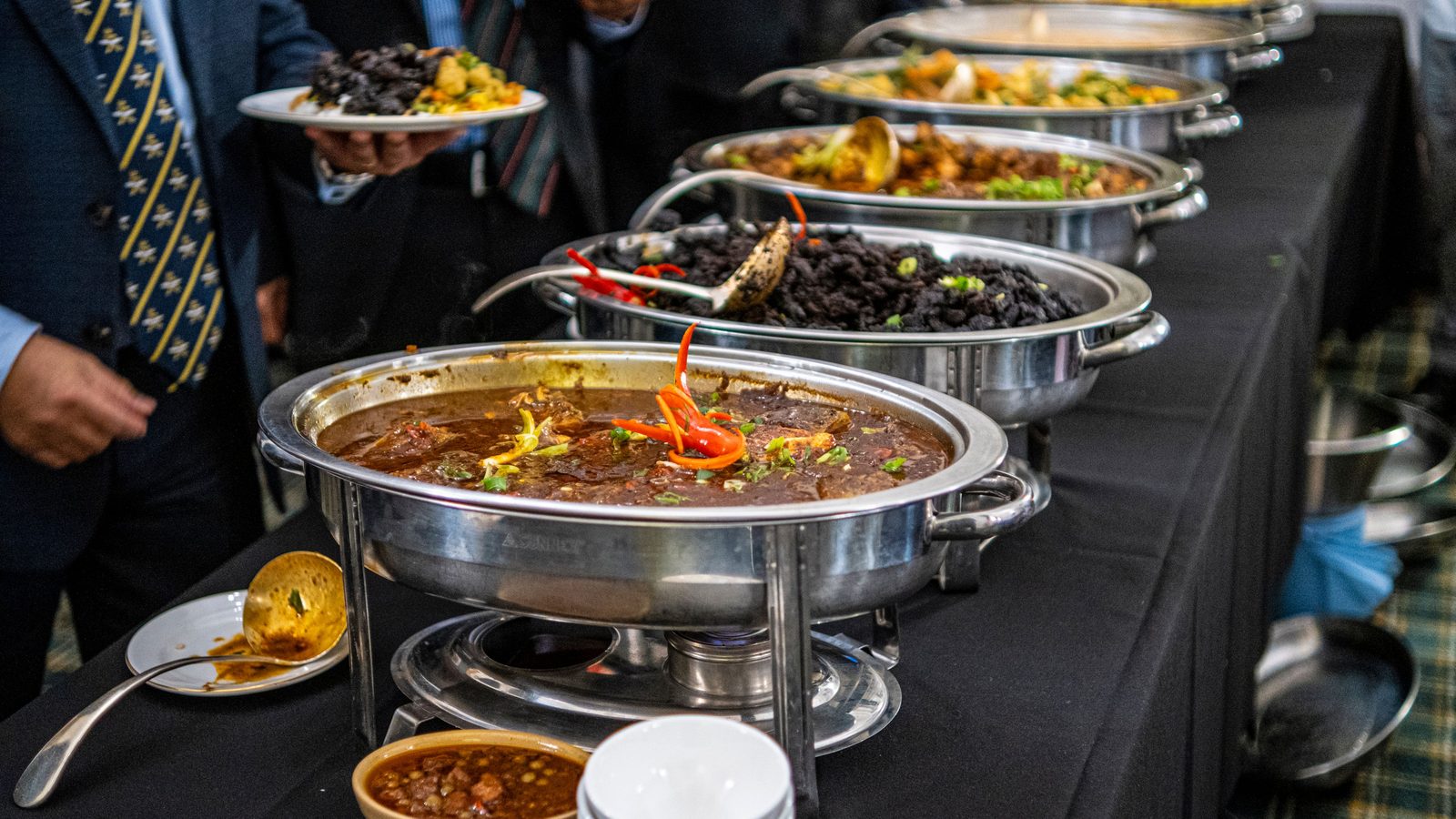
Quick answer: For a home buffet, a chafing dish is fine for keeping food hot for a few hours, but it isn’t a reheater. Heat every dish until it’s steaming first, then hold it above 60°C, which is what the WHO’s food safety poster asks for. An induction cooktop on its lowest setting can hold one or two pots well, while a chafing dish or electric warmer suits a spread of four or more dishes. Anything that’s been sitting lukewarm for more than 2 hours should go.
Key takeaways
- The WHO says to keep cooked food piping hot, above 60°C, before serving, and not to leave it at room temperature for more than 2 hours.
- A chafing dish holds heat. It’s slow and uneven at reheating cold food, so reheat on the stove first.
- Induction on low works for one or two pots, but you need a socket and counter space for each one.
- On Amazon.in on 18 November 2026, round steel chafing dishes were listed at roughly ₹2,000 to ₹7,500, and electric food warmers at about ₹2,800 to ₹4,600.
The wedding season is about to get busy. For many families, it picks up after Dev Uthani Ekadashi, which falls on Friday, 20 November this year. That means more relatives at home, more mehendi lunches, and more “just a small get-together” dinners for 20 people. The cooking is only half the job. The other half is keeping the dal, sabzi and rice hot from the first plate to the last.
In this article, you’ll learn:
- What temperature buffet food should stay at, and for how long
- When a chafing dish makes sense, and when induction on low is enough
- Gel fuel, electric warmers and insulated casseroles compared
- A simple plan for serving a home buffet safely
Why Buffet Food Needs to Stay Hot
Food that cools slowly sits in what food scientists call the danger zone. The WHO’s Five Keys to Safer Food poster puts that zone between 5°C and 60°C. It explains that microorganisms can multiply very quickly at room temperature, and that holding food below 5°C or above 60°C slows or stops their growth.
The same poster gives three rules that matter for any buffet:
- Keep cooked food piping hot, above 60°C, before serving.
- Don’t leave cooked food at room temperature for more than 2 hours.
- Reheat cooked food thoroughly.
India’s food regulator is stricter for businesses. FSSAI’s hygiene rating checklist for food service asks caterers and restaurants to hold hot vegetarian food at 65°C and non-vegetarian food at 70°C. It also says reheated food should reach 75°C at the core, and that reheating under a bain-marie or heat lamp doesn’t count. You’re not a caterer, but it’s a useful benchmark. Hotter is safer.
Dal, rice, paneer gravies and anything with milk or curd need the most care. Rice is a known risk when it’s cooked and then left warm for hours, so don’t leave a big pot of pulao sitting out after lunch.
Chafing Dish vs Induction: How Each One Holds Heat
A chafing dish is a steel food pan that sits over a water pan, with a heat source underneath. The heat source is usually a small can of gel fuel, or an electric element in electric models. The hot water spreads gentle, even heat under the food. That’s why it’s good at holding and not so good at heating. Starting with cold food means waiting a long time, and the middle may never get properly hot.
An induction cooktop heats the pot itself. On a low setting, it keeps a heavy-bottomed pot of dal or sabzi hot for as long as you need. It’s quicker to bring food back up to temperature, and you already own the pot. The catch is that you need one cooktop and one socket for every pot you want hot, and an induction plate on a dining table is a burn and tripping risk with kids around.
| Chafing dish (gel fuel) | Electric chafing dish or food warmer | Induction on low | Insulated casserole | |
|---|---|---|---|---|
| Best for | 4+ dishes on a table, no sockets needed | 2 to 3 dishes near a socket | 1 to 2 dishes, short service | Rotis, rice, one curry |
| Holds hot food | Yes, while the fuel lasts | Yes, steadily | Yes, very well | For a while, slowly cools |
| Reheats cold food | Poorly | Slowly | Well | No |
| Needs power | No | Yes | Yes | No |
| Main risk | Open flame, fuel running out | Some warmers run cooler than 60°C | Scorching the base, cables | Food drifting below 60°C |
Our induction vs gas stove comparison covers the running cost side if you plan to keep induction on for a few hours.
When a Chafing Dish Is Worth Buying
A chafing dish earns its place if you host big lunches a few times a year. Weddings, pujas, Gurpurab gatherings and kitty parties are all good examples. It also helps when you want the food on the dining table or in the living room, away from the kitchen and the sockets.
It’s probably not worth it if you host 8 to 10 people once in a while. Serving straight from the kitchen, with the pot on a low flame or on induction, does the same job. A couple of insulated casseroles for rotis and rice will cover the rest.
A few things to check before you buy:
- Size. Round 6 to 10 litre models suit dal and gravies. Rectangular trays suit pulao, biryani and dry sabzi.
- Heat source. Gel fuel works anywhere. Electric models are tidier but need a socket nearby.
- Real holding temperature. The US FDA’s buffet guidance warns that some warmers only hold food at 110°F to 120°F, roughly 43°C to 49°C. That’s inside the danger zone, so read the label or test it with a thermometer.
- Lid design. A hinged or roll-top lid keeps heat in between servings and is easier for guests.
- Stability. The frame should sit firmly on the table with the water pan full.
Price check: On Amazon.in search listings on 18 November 2026, round steel chafing dishes from 6 to 10 litres were mostly listed between about ₹2,000 and ₹7,500, with gel-fuel models around ₹3,300. Electric food warmers were about ₹2,800 to ₹4,600, and insulated steel casseroles about ₹700 to ₹3,100. Prices change often, and some listings show inflated MRPs, so compare a few sellers.
How to Use a Chafing Dish Safely at Home
Here’s the routine that keeps a chafing dish doing its job:
- Fill the water pan with hot water, not cold. It gets up to temperature much faster.
- Light the fuel or switch it on a little before guests arrive, with the empty food pan and lid in place, so the water is already hot.
- Reheat every dish on the stove until it’s steaming hot, then transfer it. Never put fridge-cold dal into a chafing dish and hope.
- Keep the lid closed between servings. Most heat escapes from the top.
- Stir gravies now and then so the edges don’t dry out and the centre stays hot.
- Check the fuel. Have a spare can ready and swap it before the old one runs out.
If you have a kitchen thermometer, check the middle of each dish once an hour. You want it above 60°C.
Fire safety: Gel fuel burns with an almost invisible flame. Keep the chafing dish away from curtains, dupattas and decorations, put it on a stable surface, and keep children away. Put it out with the fuel can’s lid or the snuffer that comes with the stand, never with water.
A Simple Plan for Serving a Home Buffet
Food safety at a buffet is mostly about timing, not equipment. This plan works whether you own a chafing dish or not:
- Cook ahead, cool fast. If you cook the day before, cool dishes quickly in shallow containers and refrigerate them. FSSAI’s checklist asks caterers to cool high-risk food from 60°C to 21°C within 2 hours.
- Reheat in batches. Bring out smaller pots and refill from the kitchen instead of putting all the food out at once.
- Don’t top up old food with new. Swap the whole pan. Fresh dal poured over dal that’s been out for two hours doesn’t make the old dal safe.
- Watch the clock. Note when each dish went out. After 2 hours at room temperature, throw it away. In a warm room, the US FDA cuts that to 1 hour once the temperature goes above 32°C.
- Keep cold food cold. Raita, salads and sweets like rasmalai belong in the fridge until serving, then back in after an hour or so.
- Pack leftovers quickly. Anything that stayed hot can be cooled and refrigerated. Anything that sat lukewarm should be discarded, however much you made.
If you’re planning the menu too, pick dishes that hold well. Dal, chole, rajma and pulao are forgiving. Fried snacks go soggy under a lid, so serve those fresh from the kitchen.
Frequently Asked Questions About the Chafing Dish
How long can food stay in a chafing dish?
As long as it stays above 60°C and the heat source keeps going. The 2-hour limit in the WHO’s guidance is for food left at room temperature. If the fuel runs out and the food cools down, start counting from then.
Can I reheat food in a chafing dish?
It’s not designed for that. The water bath heats slowly, and cold food can stay in the danger zone for too long. FSSAI’s checklist for food businesses specifically says reheating under a bain-marie isn’t acceptable. Reheat on the stove first.
Is induction on low better than a chafing dish?
For one or two pots, often yes. Induction heats faster and holds steady. For a long table with several dishes, a chafing dish or electric warmer is more practical because it doesn’t need a socket for every pot.
Are electric food warmers hot enough?
Some are and some aren’t. The US FDA notes that some warmers only reach about 43°C to 49°C. Check the product listing for the holding temperature, or measure it yourself before the party.
Keep It Hot, Keep It Short
A chafing dish is a handy buy if you host big gatherings, but think of it as a way to hold heat, not to make food hot. Reheat everything until it’s steaming, keep it above 60°C, and clear anything that’s been sitting lukewarm for 2 hours. For smaller get-togethers, induction on low and a couple of insulated casseroles will do the same job.
Save this guide for your next family function, share it with whoever’s in charge of the food, and follow our WhatsApp channel for more practical kitchen guides.