
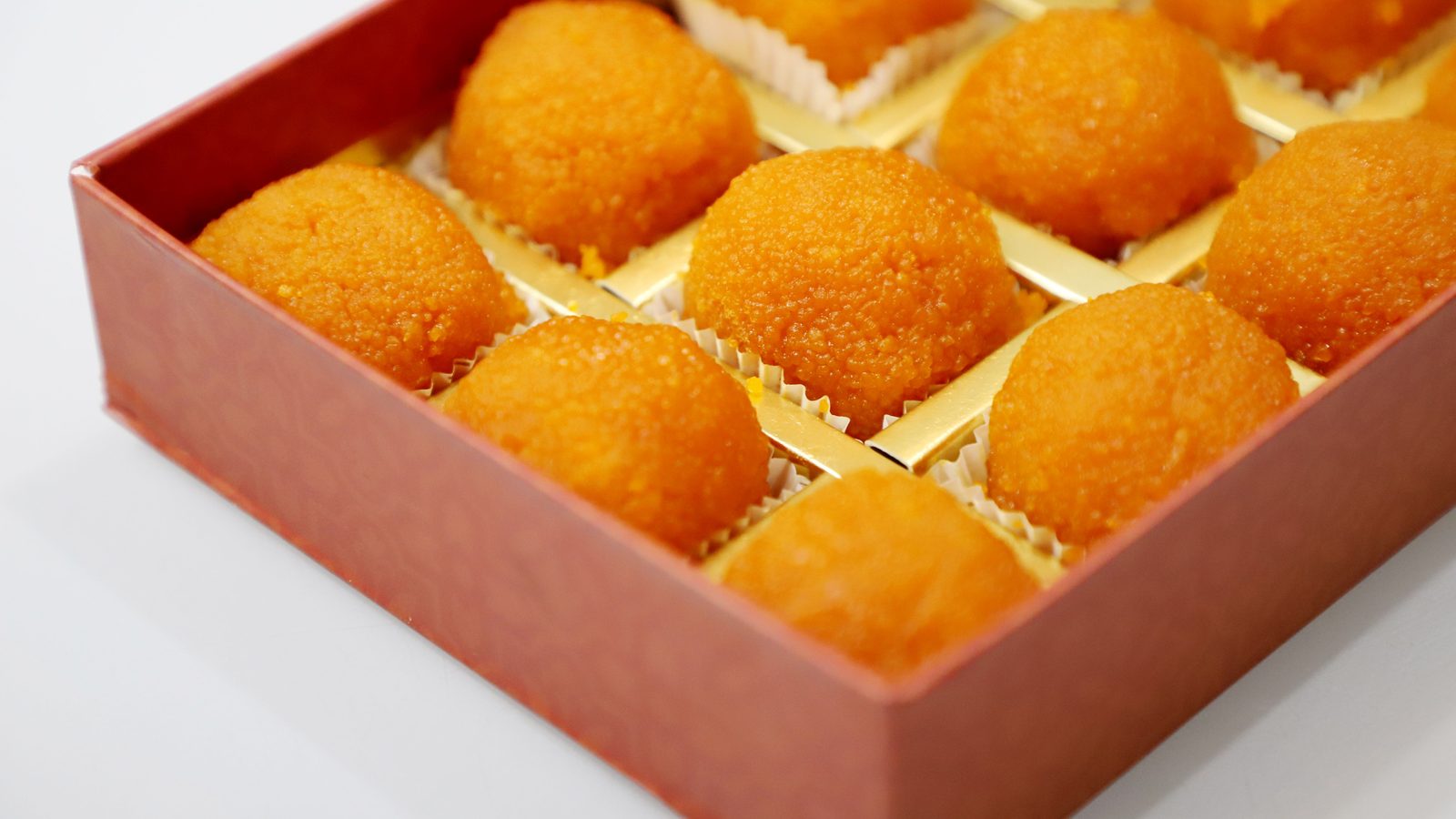
Quick answer: Diwali sweets shelf life depends on what’s in the sweet. An FSSAI guidance note gives kalakand a single day, rasgulla and rasmalai 2 days in the fridge, most khoya burfi and peda 4 days, kaju katli 7 days, and besan laddoo about 30 days. These are guides for shops, so follow the date on your box first. If it’s a milk sweet with no date, eat it soon.
Key takeaways
- Milk sweets spoil fastest. FSSAI puts many of them at just 1 to 4 days.
- Loose sweets at shops should display a best before date on the tray.
- Sort a mixed gift box as soon as it arrives, because the sweets in it won’t all last the same time.
- The list is illustrative and has no force of law, so a shop’s own date comes first.
In this article, you’ll learn:
- FSSAI’s shelf life list, sorted into five groups
- Why a mixed gift box needs sorting on day one
- How to read the date on loose sweets
- What to do with homemade sweets
- When to throw a sweet away
Why Diwali Sweets Shelf Life Varies So Much
It mostly comes down to moisture and milk. A soft, wet chenna sweet gives germs plenty to grow on. A dry, sugar-heavy sweet like chikki gives them far less.
FSSAI’s Guidance Note on Safety and Quality of Traditional Milk Products says sweets, particularly those with milk products, have a shelf life of 1 to 4 days and are more prone to microbial growth. It also gives a neat example: khoya burfi lasts less time than boondi laddoo.
Diwali sweets shelf life matters more than usual right now. Sweets arrive from all sides in the same week, and they often get stacked on a kitchen counter and forgotten.
FSSAI’s Diwali Sweets Shelf Life List
Here’s the list from the guidance note, with a few familiar names pulled from each group. These are days from the date of manufacture, and not from the day you got the box.
| Group | Eat within | Common examples | Storage in the note |
|---|---|---|---|
| Very short | Same day | Kalakand and its flavoured versions | Room temperature, same day |
| Short | 2 days | Rasgulla, rasmalai, rabri, cham cham, sandesh, malai roll | Refrigerator |
| Medium | 4 days | Milk cake, Mathura peda, plain or milk burfi, coconut burfi, boondi laddoo, coconut laddoo | Not stated |
| Long | 7 days | Kaju katli, dry fruit laddoo, dry fruit gujia, balusahi, moong burfi, besan burfi, ghewar | Not stated |
| Very long | About 30 days | Besan laddoo, chana laddoo, Karachi halwa, sohan halwa, gajak, chikki | Not stated |
Two things to keep in mind. FSSAI calls this an illustrative list, and the note says it doesn’t have any force of law. Some sweets also show up in two groups: atta laddoo is listed at both 7 and 30 days, which tells you recipes vary. When in doubt, go with the shorter number.
How to Sort a Mixed Gift Box
Mixed boxes are where Diwali sweets shelf life trips people up. A box with rasmalai, burfi and kaju katli has three different clocks running, so don’t treat it as one item.
- Open it the day it arrives. Check the date on the box, and note who gave it to you and when.
- Separate the groups. Put wet, syrupy sweets in their own airtight container in the fridge.
- Keep sweets apart. Moisture from one can soften another, and flavours travel.
- Eat in order. Kalakand and rasgulla first, then burfi and peda, with kaju katli and besan laddoo last.
- Re-gift only what will last. Passing on a box of milk sweets at day 3 isn’t a kindness. Dry fruit sweets and chikki are better for that.
The same thinking applies to snacks. Our guide to storing Diwali faral covers chakli, chivda and the rest.
How to Read the Date on Loose Sweets
The tray label is your best clue to Diwali sweets shelf life at a shop. Loose sweets used to come without any date. Then FSSAI ordered that the tray or container at the shop must show a best before date, as reported by the Free Press Journal. Showing the manufacturing date is optional, according to reports on that order. The seller decides the date based on the product and local conditions.
So before you pay:
- Look for a best before date on the tray, and ask if you can’t see one.
- Ask whether the sweet was made today, especially for rasgulla and kalakand.
- Check that milk sweets are kept in a cold, covered counter.
- Look for the shop’s FSSAI licence or registration number on display.
Our post on khoa and paneer checks goes deeper on the cold chain. For adulteration, see our food adulteration test guide.
What About Homemade Sweets?
The FSSAI list covers Diwali sweets shelf life at shops, so it won’t exactly fit your kitchen. Your recipe, your weather and how clean your containers are all make a difference. Still, it’s a useful guide.
| If you made | Treat it like | Practical tip |
|---|---|---|
| Kheer or rabri | The 2-day group | Fridge within a couple of hours of cooling |
| Khoya burfi or peda | The 4-day group | Fridge it if your kitchen is warm |
| Coconut laddoo | The 4-day group | Fresh coconut goes off faster than dry |
| Besan or atta laddoo | The 7-day group, to be safe | Airtight tin, clean dry spoon |
These are our cautious suggestions, based on FSSAI’s groups, and not official limits. WHO lists “keep food at safe temperatures” as one of its five keys to safer food, so don’t leave milk sweets sitting out through a long party.
When to Throw a Sweet Away
Diwali sweets shelf life is only a guide, and your nose gets a vote too. The note says freshness shows in flavour, texture, colour and appearance. If a sweet doesn’t look or smell right, don’t taste it to find out. Throw it away if you notice:
- A sour or stale smell
- Mould, even a small spot
- Slime on the surface, or a rasgulla syrup that’s turned cloudy and sour
- A texture that has gone sticky or watery
- A date that has passed on a milk sweet
Cutting off a mouldy corner doesn’t make the rest safe, especially in a soft sweet. And note that a sweet can seem fine and still be past its date, so the date matters too.
Anyone who’s pregnant, elderly, very young or unwell should be stricter about this. If you get severe vomiting, diarrhoea or fever after eating, see a doctor.
Frequently Asked Questions About Diwali Sweets Shelf Life
How long does kaju katli last?
FSSAI’s list puts kaju katli at 7 days from the date of manufacture. Keep it in an airtight box, away from heat, and follow the date on the pack if there is one.
Do rasgulla need to be refrigerated?
Yes. FSSAI’s note says rasgulla and other Bengali sweets should go in the fridge and be eaten within 2 days of being made.
Can I freeze Diwali sweets?
FSSAI’s list doesn’t cover freezing, so we can’t give you an official time. If you try it, freeze sweets while they’re still fresh, not on their last day, and expect the texture to change.
Is besan laddoo really good for a month?
FSSAI lists it at around 30 days. The note doesn’t say why, though low moisture is the likely reason. Treat that as the upper limit for a well-made, well-stored batch. If it smells off or the ghee tastes rancid, throw it out.
Before You Stack That Box
Spend five minutes sorting the boxes today. Keep rasgulla in the fridge, finish the kalakand first, and save the kaju katli and besan laddoo for later in the week.
Found this useful? Save it, share it with whoever’s handling the sweets at home, and follow our WhatsApp channel for more simple kitchen guides.
This article is for general information and isn’t medical advice.