
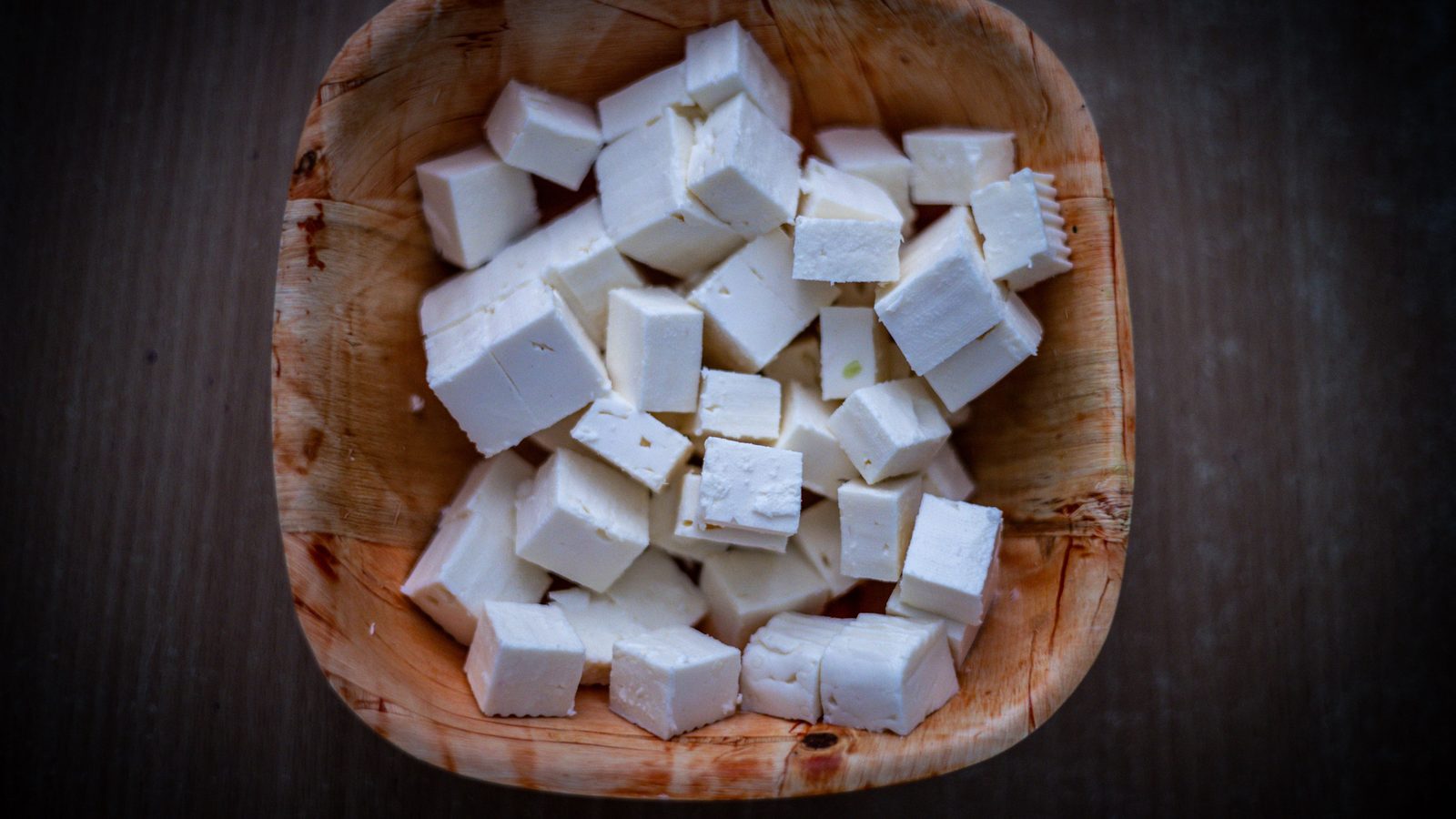
Quick answer: For soft homemade paneer, bring full-fat milk to a boil, turn off the heat, wait a minute, then stir in diluted lemon juice or vinegar a little at a time until the whey turns clear and greenish. Strain through a muslin cloth, rinse with cold water, and press under a light weight for 20–30 minutes. Paneer turns rubbery when you keep boiling after it splits or press it too hard for too long. One litre of full-fat milk usually gives about 180–200 g.
Key takeaways
- Use full-fat milk; toned milk gives less, drier paneer.
- Switch off the heat before adding acid, and stop once the whey is clear.
- Press lightly for 20–30 minutes, not hours, for soft paneer.
- Fresh paneer keeps 2–3 days in the fridge in a sealed box.
Why Make Homemade Paneer This Festive Season
Paneer is on almost every Diwali menu: paneer tikka for guests, shahi paneer for dinner, paneer bhurji for a quick breakfast. Demand for paneer and khoa jumps around festivals, and so do worries about quality. Our recent post on FSSAI’s festive food checks explains what to look out for when buying.
Making homemade paneer takes about 20 minutes of active time. You know exactly what went in, and it tastes fresher than most packets. It’s also an easy high-protein add-on for vegetarian meals.
In this article, you’ll learn:
- The simple homemade paneer method, step by step
- Which milk and acid work best
- Why paneer turns rubbery or crumbly, and how to fix it
- How much paneer you get from a litre
- How to store it and use the leftover whey
What You Need for Homemade Paneer
| Ingredient | Amount | Notes |
|---|---|---|
| Full-fat milk (cow or buffalo) | 1 litre | Buffalo milk gives more, richer paneer |
| Lemon juice or white vinegar | 2–3 tbsp | Mixed with 2–3 tbsp water |
| Cold water | 2 cups | For rinsing |
| Muslin cloth or thin cotton cloth | 1 | A clean dupatta-weight cloth works |
| Heavy pot or water-filled vessel | 1 | For pressing |
Avoid UHT “long-life” milk in tetra packs. It often splits poorly and gives a grainy, small yield.
How to Make Homemade Paneer, Step by Step
- Boil the milk. Heat it in a heavy-bottomed pan, stirring now and then so it doesn’t catch at the bottom.
- Turn off the heat. Once it boils, switch off the stove and wait about a minute. Slightly cooled milk gives softer curds.
- Add the acid slowly. Pour in the diluted lemon juice a tablespoon at a time, stirring gently.
- Watch for the split. Within a minute, white curds separate from a clear, pale greenish whey. Stop adding acid at that point. Extra acid makes paneer sour and hard.
- Strain. Line a colander with muslin and pour everything in. Save the whey in a bowl underneath.
- Rinse. Pour cold water over the curds to wash off the lemony taste and stop the cooking.
- Squeeze gently. Twist the cloth to remove extra water. Don’t wring it dry.
- Press. Shape it into a square on a plate, put a pot of water on top, and leave it for 20–30 minutes.
- Cut and use. Unwrap and cut into cubes. For extra-firm paneer for tikka, put the block in cold water for 15 minutes first.
Why Is My Homemade Paneer Rubbery or Crumbly?
Most problems come down to heat, acid or pressing time.
- Rubbery: You kept boiling after the milk split, or pressed it under a heavy weight for hours. Switch off the heat first and press lightly.
- Crumbly: Too little pressing, or low-fat milk. Use full-fat milk and press a little longer.
- Sour: Too much lemon or no rinse. Add acid slowly and always rinse.
- Very low yield: Toned or UHT milk, or the milk didn’t fully split. Use full-fat pasteurised milk.
- Hard after cooking: Paneer cooked too long in gravy. Add cubes at the end and simmer for 2–3 minutes only.
If you want extra-soft cubes for a curry, soak bought or homemade paneer in hot salted water for 10 minutes before adding it.
Lemon vs Vinegar vs Curd: Which Acid Is Best?
All three work. Lemon is the most common in Indian homes and gives a mild flavour if you rinse well. White vinegar splits milk reliably and gives slightly firmer paneer. Sour curd or the whey from your last batch gives the softest, mildest paneer but takes longer to split the milk.
Pick lemon if it’s your first time. It’s forgiving and easy to judge.
How Much Paneer From 1 Litre of Milk?
Yield depends on the milk’s fat and protein content. As a rough guide:
- Full-fat cow milk: about 160–200 g per litre
- Buffalo milk: about 200–220 g per litre
- Toned milk: often 120–150 g per litre, and drier
For a family dish like palak paneer for four, 2 litres of full-fat milk is usually enough.
Homemade Paneer for High-Protein Meals
Paneer is one of the easiest protein sources for vegetarians. The ICMR-NIN dietary guidelines list milk and milk products among good protein sources for Indian diets, alongside pulses. Paneer is also high in fat, so it’s best enjoyed in sensible portions.
Quick high-protein ideas:
- Paneer bhurji with onions, tomatoes and peas on a roti
- Grilled paneer tikka in an air fryer or on a tawa
- Paneer and vegetable stuffed paratha
- Crumbled paneer in a besan chilla
How to Store Homemade Paneer
Fresh paneer has no preservatives, so treat it like any perishable dairy product.
- Fridge: in a sealed box, covered with water or wrapped in damp cloth, for 2–3 days. Change the water daily.
- Freezer: cubes in an airtight bag for up to a month. Thaw in the fridge, then soak in warm water to soften.
- Room temperature: don’t leave it out for more than an hour or two, especially when cooking for guests.
The UK Food Standards Agency’s guidance on chilling food is a good reminder to keep the fridge at 5°C or below.
Don’t Throw Away the Whey
The leftover liquid has some protein and a pleasant tang. Use it to:
- Knead roti or paratha dough for softer rotis
- Cook rice or dal in place of water
- Make your next batch of paneer, as the acid
Use it within a day and keep it in the fridge.
Frequently Asked Questions About Homemade Paneer
Q: Which milk is best for homemade paneer?
Full-fat pasteurised cow or buffalo milk gives the best yield and softest texture. Avoid UHT tetra-pack milk.
Q: How long does homemade paneer last?
About 2–3 days in the fridge in a sealed box of water, changed daily. Freeze for longer storage.
Q: Can I make paneer with curd instead of lemon?
Yes. Sour curd or whey splits the milk more gently and gives very soft paneer, though it takes a little longer.
Q: Why didn’t my milk split?
You may need a little more acid, or the milk may be UHT. Bring it back near boiling and add another spoon of diluted lemon juice.
The Bottom Line
Homemade paneer needs only milk, lemon and 20 minutes. Switch off the heat before adding acid, stop when the whey turns clear, and press lightly. You’ll get soft, fresh paneer for every festive dish, and you’ll know exactly what’s in it.
Save this recipe for Diwali week, share it with someone who keeps buying paneer packets, and follow SmartCooking.in on WhatsApp for more quick festive recipes.