
Quick answer: In the jaggery vs sugar debate, jaggery is slightly better but not by much. It keeps a little iron, potassium and magnesium that white sugar loses in refining, and it adds lovely flavour. But calories are nearly the same, it’s still mostly sucrose, and it raises blood sugar much like sugar does. The WHO counts both as “free sugars”, so the healthiest move this Diwali is to use less of either. A straight swap changes very little.
Key takeaways
- Jaggery (gur) and white sugar both come from sugarcane. Jaggery is unrefined, so it keeps some molasses and minerals.
- Calories are close: roughly 375 kcal per 100 g for jaggery and close to 400 for sugar.
- Blood sugar studies are mixed. People with diabetes should treat jaggery like sugar.
- WHO advises keeping free sugars under 10% of daily calories, and ideally under 5% (about 25 g, or 6 teaspoons).
In this article, you’ll learn:
- How jaggery and sugar are made, and why that matters
- A side-by-side table of calories, minerals and blood sugar effect
- What “free sugars” means and how much is sensible in a day
- How to swap sugar for jaggery in Diwali sweets without spoiling them
- Who should be extra careful with both
Jaggery vs Sugar: How They’re Made
Both start as sugarcane juice. For white sugar, the juice is boiled, clarified and spun in a centrifuge to separate sucrose crystals from the molasses. What’s left is almost pure sucrose. That’s why it’s white and tastes of nothing but sweetness.
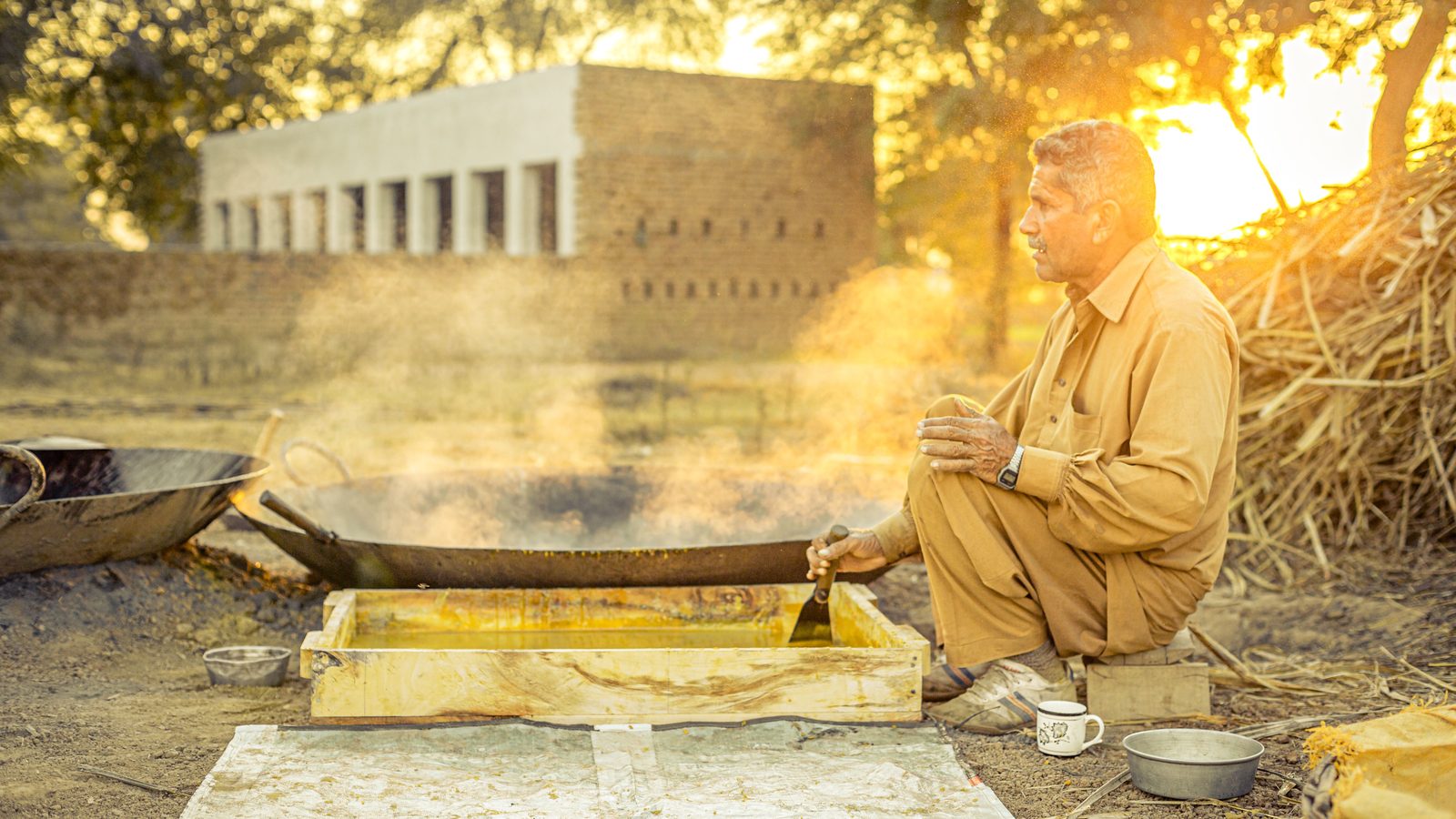
Jaggery skips the spinning. The juice is boiled down in big open pans until it’s thick, then poured into moulds to set. Since the molasses stays in, jaggery is brown, has a caramel taste and keeps small amounts of minerals. Palm and date-palm jaggery (like the nolen gur used in Bengal in winter) are made the same way from palm sap.
So the jaggery vs sugar difference is real, but it’s about processing, not about jaggery being a different kind of food. Both are mostly sugar.
Jaggery vs Sugar: Side-by-Side Comparison
Here’s how they compare on the things people ask about most. Numbers are approximate. Jaggery varies a lot depending on the cane, the region and how it’s made.
| Jaggery (gur) | White sugar | |
|---|---|---|
| Made by | Boiling cane juice, no spinning | Boiling, clarifying and spinning out molasses |
| Main sugar | Mostly sucrose, plus some glucose and fructose | Almost pure sucrose |
| Calories per 100 g | About 375 kcal | Close to 400 kcal |
| Calories per teaspoon (about 5 g) | About 19 kcal | About 20 kcal |
| Minerals | Small amounts of iron, potassium, magnesium | Almost none |
| Blood sugar effect | Raises it, studies disagree on how fast | Raises it |
| Flavour | Caramel, earthy | Plain sweet |
| Counts as free sugar (WHO)? | Yes | Yes |
The calorie figure for jaggery comes from a fact-check by The Week, which rated the claim that jaggery’s health edge is small as “largely true”. The minerals are there on paper, but in a teaspoon or two they’re too small to matter much. Iron also varies with how the jaggery was made. If you need more iron, ragi, leafy greens, rajma and chana do far more for you.
On blood sugar, the jaggery vs sugar evidence is mixed. Some sources quote a lower glycaemic index for jaggery, others a higher one. The Week also quotes a diabetologist who says jaggery’s glycaemic index is actually higher than refined sugar’s. Either way, it’s not a safe sweetener for diabetes.
What WHO Says About Free Sugars
The World Health Organization uses the term “free sugars”. It means any sugar added to food or drinks by the manufacturer, the cook or you, plus sugar naturally in honey, syrups and fruit juice. Jaggery stirred into kheer counts. So does the sugar in your chai.
In its sugars guideline, WHO recommends:
- Keeping free sugars below 10% of your total daily calories (a strong recommendation)
- Going below 5%, about 25 g or 6 teaspoons a day, for extra benefit (a conditional one)
Here’s what that looks like on a 2,000-calorie day:
| Limit | Grams of sugar or jaggery | Roughly |
|---|---|---|
| Under 10% of calories | About 50 g | 10 teaspoons |
| Under 5% of calories | About 25 g | 6 teaspoons |
For the jaggery vs sugar question, these limits matter more than the type. Now think about a festive day. Two cups of sweet chai, one besan laddoo and a piece of kaju katli can easily take you past 25 g. A single laddoo made with jaggery doesn’t change that maths much.
The sugar in whole fruit, vegetables and plain milk isn’t counted as free sugar. That’s why a date-based laddoo with nuts is still a smarter choice than a sugar-syrup sweet, even though dates are sweet. Our dates dry fruit laddoo uses no added sugar at all.
How to Swap Sugar for Jaggery in Diwali Sweets
In the kitchen, jaggery vs sugar is mostly about taste and texture. If you like jaggery’s taste, by all means use it. Just use a little less than the recipe asks for, whichever sweetener you pick. These tips help the swap work:
- Start 1:1 by weight, then cut back. Taste the mixture and reduce by a quarter if it’s sweet enough. Many families find sweets taste fine with less.
- Use powdered or grated jaggery. Big blocks melt unevenly. Grate it or buy powder for laddoos and halwa.
- Add it off the heat for milk sweets. For kheer or payasam, cool the milk slightly before stirring in jaggery. Very hot milk with jaggery can curdle.
- Expect a darker colour. Besan laddoo and coconut barfi turn golden-brown with jaggery. That’s normal.
- Melt jaggery for chikki. Chikki and til laddoo set best with jaggery syrup cooked to the hard-ball stage. That’s one place jaggery works better than sugar.
- Store it dry. Jaggery soaks up moisture and turns sticky. Keep it in an airtight steel or glass jar.
Want to check your jaggery isn’t adulterated? Our guide to FSSAI festive food checks covers simple home tests for common festive foods.
| Sweet | Better with | Why |
|---|---|---|
| Chikki, til laddoo | Jaggery | Better set and flavour |
| Besan or ragi laddoo | Either | Jaggery adds caramel notes |
| Kheer, payasam | Either | Add jaggery off the heat |
| Rasgulla, gulab jamun syrup | Sugar | Jaggery clouds and darkens syrup |
| Kaju katli | Sugar | Needs a clear, white syrup |
Who Should Be Careful With Both
Jaggery is often sold as “diabetic-friendly” or “natural sugar”. It isn’t a medical choice, and for health, jaggery vs sugar is a close call. Be extra careful if you:
- Have diabetes or prediabetes. Talk to your doctor or dietitian about safe sweet portions during the festive season.
- Are trying to lose weight. Jaggery calories count just like sugar calories.
- Are cooking for young children. WHO’s free sugar limits apply to kids too, and sweet habits start early.
- Have kidney disease and have been told to limit potassium. Ask your doctor before using jaggery regularly.
The NHS page on sugar in your diet explains how too much free sugar adds to weight gain and tooth decay. That applies whatever colour the sugar is.
Frequently Asked Questions About Jaggery vs Sugar
Q: Is jaggery better than sugar for weight loss?
Not really. A teaspoon of jaggery has about the same calories as a teaspoon of sugar. Using less of either helps weight loss. Swapping one for the other doesn’t.
Q: Can diabetics eat jaggery instead of sugar?
Jaggery raises blood sugar too, and studies disagree on whether it’s any slower. People with diabetes should count it like sugar and follow their doctor’s advice.
Q: Is it good to eat a small piece of jaggery after meals?
It’s a common tradition and many people enjoy it. A small piece is fine for most healthy adults, but it still counts toward your daily free sugar. There isn’t strong evidence that it aids digestion.
Q: Which is better for tea, jaggery or sugar?
Gur chai is popular in winter and tastes great. Health-wise, the difference is small. Try cutting the total amount, say from two teaspoons to one, whichever you use.
The Bottom Line
Jaggery vs sugar isn’t a contest with a big winner. Jaggery keeps a few minerals and brings more flavour, so it’s a nice choice for chikki, laddoos and winter chai. But it’s still sugar, with nearly the same calories and a similar effect on blood sugar. The real health win this Diwali is making smaller sweets, using less sweetener overall, and leaning on dates, nuts and millets.
Save this guide for your Diwali sweet-making day, share it with the family member who says “it’s gur, so it’s healthy”, and follow SmartCooking.in on WhatsApp for easy festive recipes.
This article is for general information and isn’t medical advice.