
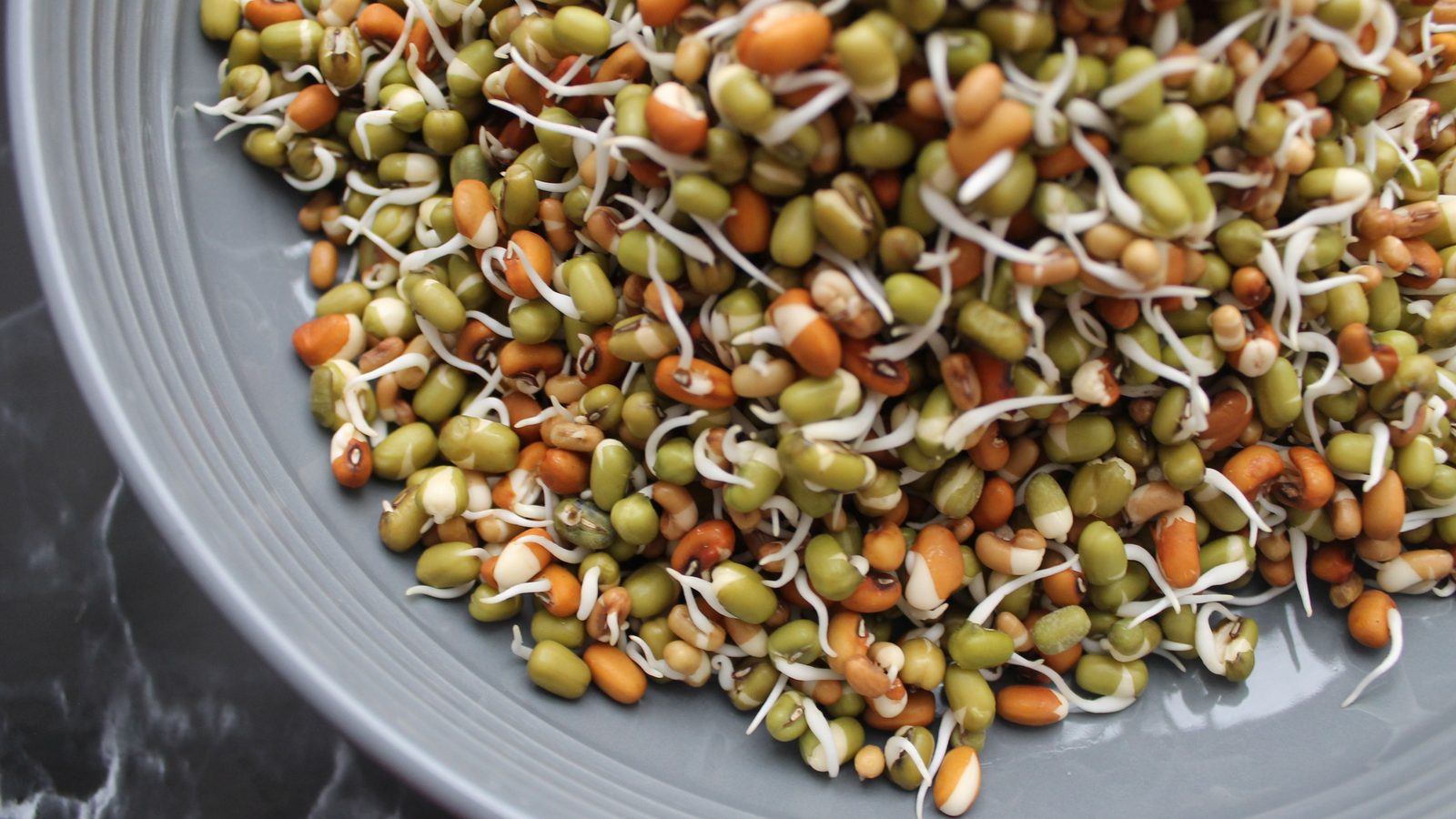
Quick answer: To make sprouts at home in winter, soak whole moong for 8–10 hours, drain it fully, then keep it in a closed casserole or a damp cloth in the warmest spot of your kitchen. Rinse and drain twice a day. In cold weather, sprouts take about 2 days instead of 1, because sprouting slows down when it’s cool. If anyone eating them is a young child, pregnant, elderly or has low immunity, steam or sauté the sprouts first.
Key takeaways
- Cold kitchens are the main reason sprouts at home are slow in winter. Warmth, not more water, speeds them up.
- Drain well after every rinse. Standing water causes the sour smell and slime.
- A closed casserole (hot case) is the easiest warm, dark spot in most Indian homes.
- Food safety agencies advise cooking sprouts for vulnerable groups. A 3-minute steam is enough for salads.
In this article, you’ll learn:
- The 2-day method for making sprouts at home with whole moong
- Why sprouts slow down in winter, and 4 ways to keep them warm
- How to stop the sour smell and slimy texture
- Which pulses sprout well, and how long each takes
- When to eat sprouts raw and when to cook them
Why Sprouts at Home Get Slow in Winter
If you make sprouts at home all year, you’ll notice it. In May, moong shows tails by the next morning. In late October or December, the same moong sits there for a day and a half and barely moves.
That’s normal. Seeds sprout faster in warm, damp conditions and slow down when it’s cool. A kitchen that drops to 15–18°C at night in north India, or a room with an air conditioner still running down south, will slow the whole process.
What helps is warmth and good drainage. Extra water only leaves the beans soggy and sour.
The 2-Day Moong Method, Step by Step
Whole green moong is the easiest pulse to start with. It’s small, sprouts evenly and is forgiving.
- Pick and wash (5 minutes). Take 1 cup of whole moong. Remove stones and broken beans. Wash 2–3 times until the water runs clear.
- Soak (8–10 hours). Cover with 3 cups of room-temperature water. In winter, slightly warm water (just warm to touch, not hot) helps. Soak overnight.
- Drain completely. Tip the moong into a sieve and let it drip for 5 minutes. This step matters most.
- Keep it warm and dark. Put the moong into a casserole, a steel box with a loose lid, or tie it in a damp muslin cloth. Keep it in the warmest place in your kitchen.
- Rinse twice a day. Every 10–12 hours, rinse under running water, drain fully again, and put it back.
- Check after 24 hours. You’ll see small white tails. In winter, most batches need another 12–24 hours for tails about 1 cm long.
- Refrigerate. Once they’re as long as you like, rinse, drain, pat dry and store in a closed box in the fridge. Use within 2–3 days.
4 Ways to Keep Sprouts Warm in a Cold Kitchen
You don’t need a sprout maker. Most homes already have a warm corner.
- Casserole (hot case). The insulated box you keep rotis in holds warmth well. Put the drained moong inside in a steel bowl and close the lid.
- Near, not on, the stove. A shelf a little above or beside the cooking area stays warmer than the rest of the kitchen. Don’t put the box directly next to the flame.
- Wrapped in a cloth. Wrap the steel box in a thick kitchen towel. It holds warmth the way a quilt does.
- Top of the fridge. The back top of many fridges stays slightly warm from the motor. Check yours by touch first.
Avoid putting sprouts in a switched-on oven or near a heater. Too much heat can cook the outside or encourage spoilage.
Why Your Sprouts Smell Sour or Turn Slimy
A sour smell is the most common complaint. It usually comes from one of these:
| Problem | Likely cause | Fix |
|---|---|---|
| Sour or fermented smell | Water left at the bottom | Drain fully after every rinse; tilt the box |
| Slimy feel | Too few rinses or too much heat | Rinse twice a day; move to a cooler warm spot |
| No tails after 2 days | Old or damaged beans, or too cold | Use fresh stock; keep it warmer |
| Some beans stay hard | Those beans won’t sprout | Pick them out before cooking |
| Dark patches or fuzzy growth | Spoilage | Throw the whole batch away |
A mild, fresh, “green” smell is fine. A strong sour or rotten smell, slime that won’t rinse off, or any mould means the batch goes in the bin. Don’t try to save it by cooking.
Sprouts at Home: Which Pulses Work Best
Moong is the easiest pulse for sprouts at home, but other whole pulses work too. Here’s roughly what to expect in a cool kitchen.
| Pulse | Soak time | Sprouting time in winter | Best use |
|---|---|---|---|
| Whole green moong | 8–10 hours | 1.5–2 days | Salads, usal, chilla |
| Matki (moth beans) | 8–10 hours | 1.5–2 days | Misal, usal |
| Kala chana | 10–12 hours | 2–3 days | Chaat, sundal (cook first) |
| Methi seeds | 8 hours | 2 days | Small amounts in sabzi |
| Whole masoor | 8 hours | 1.5–2 days | Salads, curries |
Split dals won’t sprout, because the seed is broken. Rajma isn’t a good pick for raw sprouts either. Raw or undercooked kidney beans need proper boiling, as we explained in our dal guide above.
Raw or Cooked: The Safety Part
This is the part most recipe pages skip. Sprouts are grown in warm, damp conditions, and those same conditions suit bacteria. Ireland’s food safety authority, FSAI, explains that if seeds start out contaminated, bacteria can multiply during sprouting. It says older people, young children, pregnant women and people with weak immunity should avoid raw sprouts, and that cooking destroys the bacteria.
Health Canada’s food safety advice goes further and advises everyone to cook sprouts thoroughly. It also recommends refrigerating them and throwing out any that look dark or smell musty.
Making sprouts at home helps you control cleanliness and freshness, but it doesn’t remove this risk, since the bacteria can come from the seeds themselves. A simple middle path for most families:
- Steam for 3–4 minutes before adding to salads or chaat. They stay crunchy.
- Sauté in a little oil with jeera, onion and lemon for a quick usal.
- Cook fully for kala chana and anything going into a curry.
How to Use Sprouts in Quick Meals
Sprouts at home are a cheap weekday protein, and sprouted moong cooks fast. Whole moong has roughly 22–24 g of protein per 100 g dry weight. Sprouting doesn’t add protein, but it makes the moong quicker to cook and easy to use without soaking-day planning. The ICMR-NIN Dietary Guidelines for Indians list pulses as a daily food group, and sprouts are one easy way to eat them.
Ideas that take 15 minutes or less:
- Moong sprout chaat: steamed sprouts, onion, tomato, cucumber, chaat masala, lemon.
- Sprout usal: sauté with mustard seeds, curry leaves, onion, turmeric and a little coconut.
- Sprout chilla: grind sprouts with ginger and green chilli, spread like a dosa.
- Tiffin add-on: toss steamed sprouts into poha or upma. For more ideas see our 15-minute tiffin recipes.
Pair sprouts with paneer or curd for a bigger protein meal. Our homemade paneer guide shows how to keep paneer soft.
Frequently Asked Questions About Sprouts at Home
Q: How long do sprouts take to grow at home in winter?
Usually 1.5–2 days for moong after an 8–10 hour soak. In summer the same batch is often ready in under a day.
Q: Why do my homemade sprouts smell bad?
Most often it’s water left at the bottom of the box. Drain fully after every rinse. If the smell is strong or there’s slime or mould, throw the batch away.
Q: Is it safe to eat raw sprouts?
Food safety agencies advise caution. Young children, pregnant women, older adults and anyone with low immunity should eat them cooked. For everyone else, a quick steam is the safer habit.
Q: How long can I store sprouts in the fridge?
Keep them dry in a closed box and use within 2–3 days. Throw out any that turn dark, slimy or smell musty.
The Bottom Line
Winter sprouts need more warmth, less water and a bit more patience. Soak overnight, drain well, keep them in a casserole or wrapped box, rinse twice a day and give them two days. Then steam them before eating, and you’ve got a quick, cheap protein for the whole week.
Save this for your next batch, share it with whoever makes the family’s Sunday usal, and follow SmartCooking.in on WhatsApp for more quick, healthy Indian cooking.