
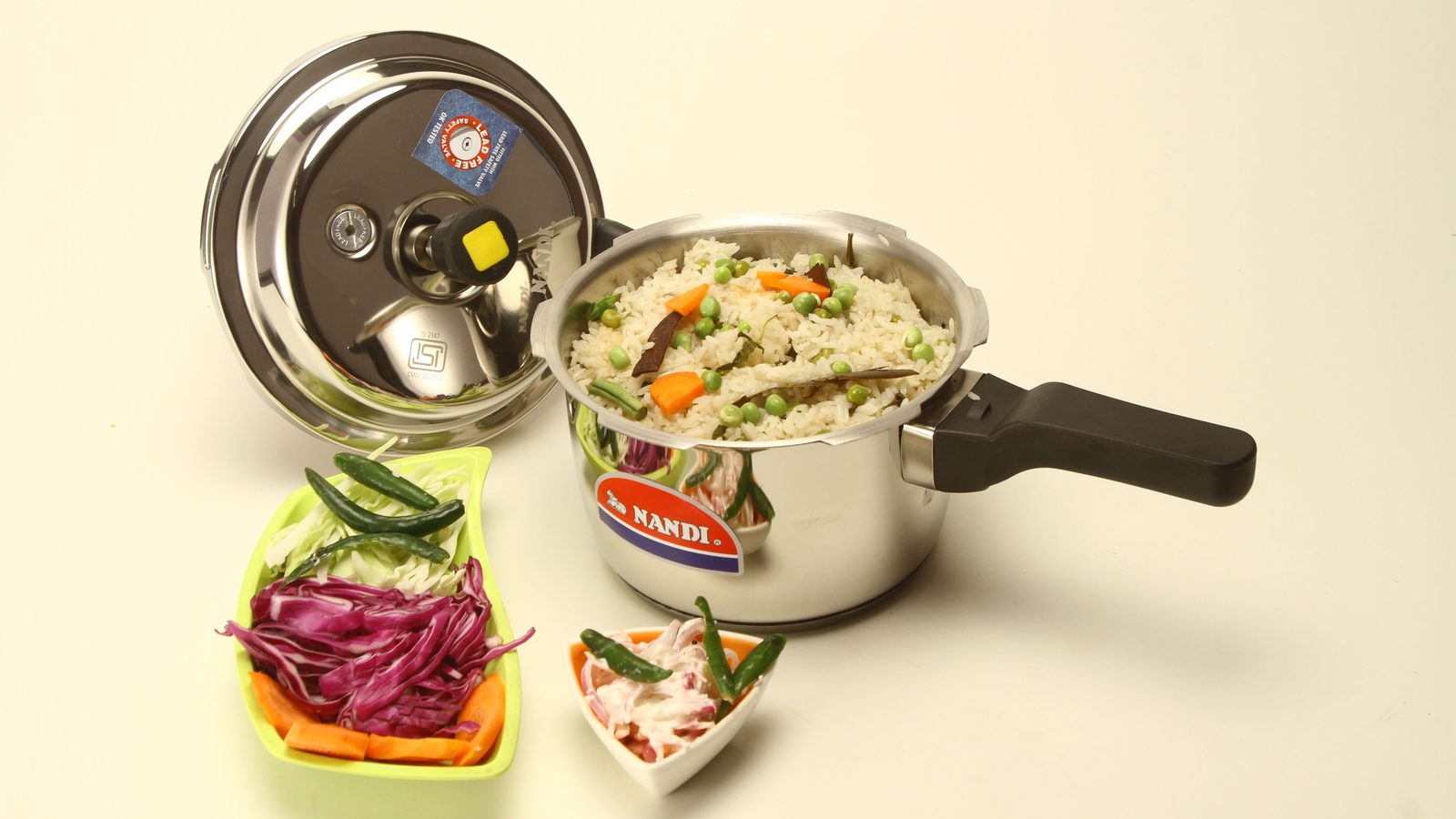
Quick answer: A pressure cooker overflowing with dal or rice is usually caused by overfilling, too much water, high flame after the first whistle, or a worn gasket. Fill dal only up to half the cooker, add a few drops of oil, lower the flame after the first whistle, and replace the gasket if it’s hard or cracked.
Key takeaways
- Never fill beyond two-thirds for most food, and half for dal, rice and rajma.
- Lower the flame right after the first whistle.
- A few drops of oil or ghee cut down froth from dal.
- A cracked or loose gasket is a safety issue. Replace it.
Why Is My Pressure Cooker Overflowing?
You put toor dal in the cooker, turn on the gas, and walk away. Two whistles later, there’s yellow foam all over the stove and the whistle is covered in dal. Sound familiar? A pressure cooker overflowing is one of the most common kitchen problems in Indian homes.
The good part is that it’s almost always fixable at home. Most of the time, it’s about how much you fill, how much water you add, and how high the flame is.
In this article, you’ll learn:
- The 7 main reasons a cooker spills
- Fill levels and water ratios for common foods
- How to check the gasket, whistle and safety valve
- When it’s time to replace parts or the cooker
7 Reasons Your Pressure Cooker Is Overflowing
1. Overfilling the cooker
This is the biggest reason. Dal, rice and beans swell and foam as they cook. If the cooker is too full, the froth has nowhere to go but up through the whistle. As a rule, fill dal and rice only up to half the cooker. Other foods can go up to two-thirds.
2. Too much water
Extra water creates more froth and pushes it up. Use the right ratio (see the table below) and avoid “a little extra, just in case.”
3. High flame after the first whistle
High flame is fine until the first whistle. After that, lower the flame to medium-low. Strong heat after pressure builds makes the contents boil hard and spill out.
4. Starchy or frothy foods
Toor dal, moong dal, rajma, chana and rice release starch and proteins that foam. That’s normal. However, it means you need to be more careful with fill levels and flame.
5. No fat in the dal
A few drops of oil or ghee break the foam on the surface. Add ½ tsp before closing the lid. A pinch of turmeric also helps a little.
6. Worn or dirty gasket
The rubber ring (gasket) seals the lid. When it gets old, hard or stretched, steam and food leak from the sides instead of building pressure. Check it every few months.
7. Blocked vent pipe or whistle
Bits of dal or rice can block the vent tube. This stops steam from releasing properly. Clean the vent pipe and whistle after every use with a thin brush or by holding them under running water.
Water and Fill Guide to Stop Pressure Cooker Overflowing
| Food | Water ratio | Max fill | Whistles (medium-low after first) |
|---|---|---|---|
| Toor dal | 1 : 3 | Half | 3–4 |
| Moong dal | 1 : 2.5 | Half | 2 |
| Rice | 1 : 2 | Half | 2–3 |
| Rajma (soaked) | 1 : 3 | Half | 5–6 + 10 min low |
| Chana (soaked) | 1 : 3 | Half | 5–6 + 10 min low |
| Potatoes | Just to cover | Two-thirds | 2–3 |
| Vegetables | ½ cup water | Two-thirds | 1–2 |
These are general guides. Cooker sizes and dal quality vary, so adjust slightly for your cooker.
Use a separator or container
Cooking dal in a small steel container inside the cooker (with water around it) almost stops spills completely. It’s how many families cook dal and rice together at once.
Safety Checks You Shouldn’t Skip
A pressure cooker overflowing now and then is messy. But some signs point to a safety problem.
- Steam leaking from the sides of the lid: Gasket is worn or the lid isn’t closed properly.
- No whistle even after a long time: Vent may be blocked. Turn off the gas and let the cooker cool before checking.
- Safety valve has melted or burst: Stop using the cooker and replace the valve with the brand’s original part.
- Dented lid or body: Replace the cooker.
Always buy a cooker and spare parts with the ISI mark. The Bureau of Indian Standards certifies pressure cookers sold in India, and using non-certified parts can be unsafe. Brand websites like Hawkins also share care guides and genuine spare parts.
Never force the lid open
Wait for the pressure to drop on its own, or place the cooker under running water if your brand’s manual allows it. Lifting the whistle to release steam fast can spray hot dal all over you.
Picking the right size cooker
A cooker that’s too small for your family will overflow more often, because you keep filling it to the top. For 1–2 people, a 2–3 litre cooker is usually enough. Families of 3–4 do better with a 3–5 litre cooker, and larger families with 5 litres or more. If you often cook dal and rice together, a bigger size with a separator saves time.
Aluminium vs steel
Aluminium cookers heat up quickly, so they reach the first whistle faster and can spill sooner if you don’t lower the flame. Steel cookers heat more slowly and evenly, and they’re easier to clean after a spill. Either works well with the right fill level.
Clean-Up Tips After a Spill
- Soak the whistle and gasket in warm soapy water for 10 minutes.
- Use an old toothbrush to clean the vent tube.
- Wipe the stove while it’s warm (not hot). Dried dal sticks hard.
- Check the burner holes for blocked food, which can cause uneven flame.
If you cook on induction, flat-bottom cookers work best. See our induction cooktop recipes for quick cooker-based dinners.
Frequently Asked Questions About Pressure Cooker Overflowing
Q: Why does dal come out of the pressure cooker whistle?
Dal foams as it cooks. If the cooker is too full, has too much water or stays on high flame after the first whistle, the foam escapes through the whistle. Fill only half and lower the flame.
Q: How do I stop my pressure cooker from overflowing?
Fill dal and rice up to half the cooker, use the right water ratio, add a few drops of oil, and lower the flame after the first whistle. Clean the vent and check the gasket regularly.
Q: When should I replace the pressure cooker gasket?
Replace the gasket when it becomes hard, cracked, stretched or starts leaking steam. For daily use, that’s usually every 6–12 months.
Q: Is it dangerous if my pressure cooker overflows?
A one-time spill is usually just messy. But if steam leaks from the sides, the safety valve releases, or the whistle doesn’t blow, stop and check the cooker. Use only ISI-marked parts.
No More Dal on the Stove
A pressure cooker overflowing isn’t a mystery. It’s mostly about fill level, water and flame. Fix those three and you’ll rarely clean dal off the stove again. Also, check the gasket and vent every few months for safety.
Try the half-fill rule tomorrow and see the difference. Share this with anyone who’s tired of cleaning the stove, and follow SmartCooking.in for more kitchen fixes.