
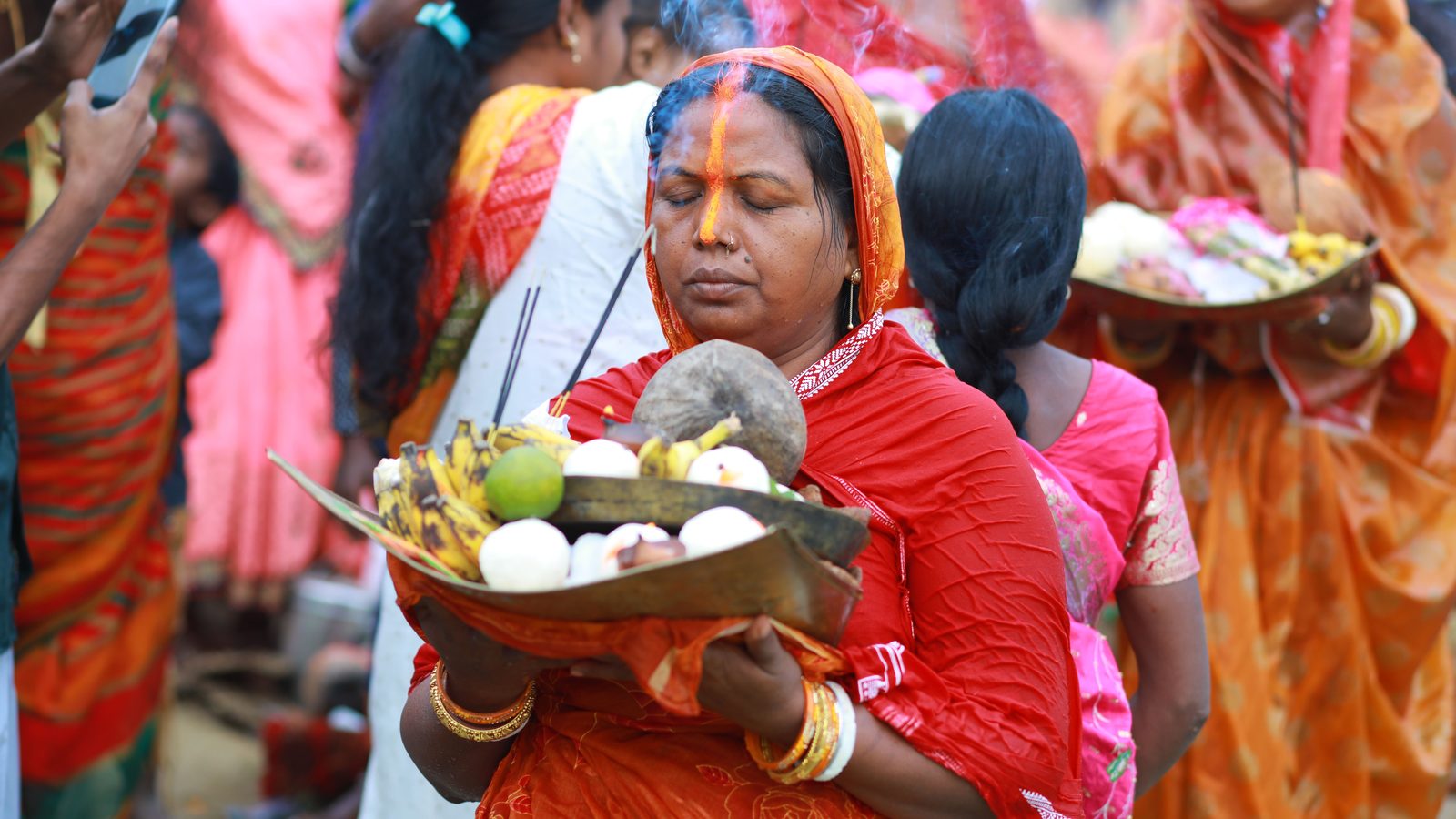
Quick answer: A good thekua recipe needs just wheat flour, jaggery, ghee and fennel. Melt the jaggery in a little water and let it cool before it touches the flour. Rub the ghee into the flour first, knead a stiff dough with as little liquid as you can, and fry on medium heat until deep golden. Thekua is meant to firm up as it cools, so aim for crisp and crumbly, not soft like a puri.
Key takeaways
- Chhath Puja’s main evening offering falls on Sunday, 15 November 2026, so most families fry thekua a day or two before.
- For 2 cups of atta, well-known recipes use ½ to ¾ cup jaggery and 2 tablespoons to ¼ cup ghee.
- Hot syrup, too much water and a high flame are the usual reasons thekua turns rock hard or stays raw inside.
- No mould at home? A fork gives you the pattern.
In this article, you’ll learn:
- When to make thekua for Chhath 2026
- A simple thekua recipe with jaggery and exact quantities
- Five mistakes that make it hard, raw or crumbly in the oil
- How to shape it without a wooden mould
- How to store it so it stays crisp
When to Make Thekua for Chhath 2026
Chhath is a four-day festival, and thekua is its best-known prasad. Drik Panchang lists Chhath Puja on Sunday, 15 November 2026. That’s the day of the evening offering to the setting sun, with sunset in New Delhi at 5:28 pm.
Working back from that, the festival opens with Nahay Khay on Friday 13 November and Kharna on Saturday 14 November. It closes with the morning offering at sunrise on Monday 16 November.
Thekua goes into the bamboo basket for both offerings, so it has to be ready by the afternoon of the 15th. Most families make it on Kharna day or on the morning of the 15th. For Chhath it’s traditionally made in the worship room, to keep the prasad pure.
If this is your first Chhath in charge of the kadai, do a small trial batch now, while there’s still time to adjust.
A Simple Thekua Recipe With Jaggery
Thekua goes by other names too, like khajuria and thokwa, and every family in Bihar, Jharkhand and eastern Uttar Pradesh has its own thekua recipe. Here are the quantities from two well-known published recipes, side by side:
| Ingredient | Sanjeev Kapoor’s version | Nisha Madhulika’s version |
|---|---|---|
| Whole wheat flour (atta) | 2 cups | 2 cups (300 g) |
| Jaggery | ¾ cup | ½ cup (130 g) |
| Ghee in the dough | 2 tablespoons | ¼ cup (60 ml) |
| Semolina (sooji) | None | ½ cup, fine |
| Dry coconut, grated | ½ cup | 2 tablespoons |
| Fennel seeds (saunf) | 1 teaspoon | 1 teaspoon |
| Cardamom | ¼ teaspoon powder | 4 pods, crushed |
| Water for the syrup | ½ cup | ¼ cup |
The two agree on the basics: 2 cups of atta, a teaspoon of saunf, a stiff dough and medium heat. They differ on sweetness and richness. More jaggery gives a darker, sweeter thekua. More ghee and a little sooji give a shorter, more crumbly bite.
If you’re new to this, here’s a middle-path thekua recipe for a first batch:
- 2 cups whole wheat flour
- ½ to ¾ cup grated jaggery, to taste
- 3 tablespoons ghee
- 2 to 3 tablespoons grated dry coconut
- 1 teaspoon fennel seeds
- ¼ teaspoon cardamom powder
- About ⅓ cup water for the syrup
- Ghee or oil for deep frying
Method
- Make the syrup. Warm the jaggery with the water, stirring until it dissolves. You don’t need to boil it to a thread. Strain it to catch any grit, then leave it until it’s no warmer than room temperature.
- Rub in the ghee. Mix the flour, coconut, fennel and cardamom. Add the ghee and rub it in with your fingertips until the flour looks like damp breadcrumbs and holds its shape when you press a fistful.
- Knead a stiff dough. Add the cooled syrup a little at a time. Stop as soon as the dough comes together. It should be much firmer than roti dough, with a few cracks at the edges. Cover and rest for 5 to 10 minutes.
- Shape. Pinch off lemon-sized pieces, roll them smooth and flatten to about the thickness of your little finger. Press onto a mould or mark with a fork.
- Fry on medium. Heat the ghee or oil on medium. Slide in a few at a time. Leave them alone for a minute or so, turn, and fry until deep golden brown on both sides.
- Cool fully. Drain on paper or a steel sieve. They’ll feel soft when hot and firm up as they cool.
5 Mistakes That Ruin a Thekua Recipe
Any thekua recipe is supposed to give you a firm sweet. It’s a dry, sturdy sweet that travels well, and it hardens as it cools. The trouble starts when it goes from crisp to tooth-breaking, or the other way, into a soft, oily puri.
1. Adding hot syrup to the flour. Sanjeev Kapoor’s recipe has you cool the syrup to room temperature before mixing. Hot liquid starts cooking the flour and makes the dough sticky, so you add more flour, knead more, and end up with a tough thekua.
2. Too much water. A soft dough is easy to shape, which is why it’s tempting. It also puffs like a puri and soaks up oil. Nisha Madhulika’s recipe says the dough should be very hard. If yours feels like chapati dough, you’ve gone too far. Work in a spoonful of flour and a few drops of ghee.
3. Skimping on ghee. The ghee you rub into the flour is what makes the inside short and crumbly. Both recipes use at least 2 tablespoons for 2 cups of atta. With less, the jaggery sets like toffee and you get a brick.
4. Frying on a high flame. The outside browns in seconds because of the jaggery, while the middle stays raw and doughy. Both recipes call for medium heat. If your thekua darkens in under a minute, lower the flame and wait before the next batch.
5. Flipping too early. A freshly dropped thekua is fragile. Poke it straight away and it can crack or shed crumbs into the oil. Give it a minute to set before you turn it. If pieces still break off, the dough is probably too dry, so knead in a teaspoon of milk or syrup.
No Mould? Shape It With a Fork
The carved wooden mould, or sancha, gives thekua its leaf and flower patterns. Markets in Bihar and eastern UP sell it before Chhath, and a basic one is cheap, usually well under ₹300.
If you don’t have one, each thekua recipe above offers a fix. Flatten the dough ball in your palm and press the back of a fork along the edges or across the top. Sanjeev Kapoor’s version shapes each piece into a thick teardrop, presses a dent down the middle and marks fork lines on either side, like a leaf.
The pattern does more than look nice. The ridges give you extra crisp edges, and the thinner sections help the centre cook through.
Keep every piece the same thickness, so that one batch fries evenly.
How to Store Thekua So It Stays Crisp
A thekua recipe uses very little liquid and the sweet is fried until crisp, so it stays dry. That’s why families carry it home from the ghat and eat it for days. A few habits help:
- Let it cool completely before it goes into a box. Warm thekua steams inside the container and turns soft.
- Use a steel or airtight container and keep it away from the stove.
- Don’t mix it in the same box as moist sweets or fruit from the prasad basket.
The same rules work for chakli, shankarpali and other dry snacks. We’ve covered them in detail in our guide on how to store Diwali faral so it stays crispy.
One note on the frying oil. If you’ve already fried Diwali snacks in a batch of oil, don’t bring it back out for Chhath. FSSAI says using the same cooking oil for repeated frying has adverse health effects. Fresh ghee or oil also tastes cleaner, which matters for prasad. If you’re choosing between the two, see our comparison of ghee vs oil for Indian cooking.
Frequently Asked Questions About Thekua Recipe
Can I use sugar in place of jaggery?
Yes. Thekua is made both ways, and some families use sugar syrup. Jaggery gives a deeper colour and a caramel taste, and it’s the more common choice for Chhath.
Should I fry thekua in ghee or oil?
Either works. Ghee is the traditional pick for prasad and gives a richer smell. Whichever you use, keep the heat at medium.
Why is my thekua soft the next day?
It was probably boxed while warm, or the dough had too much water. Next time, keep the dough stiffer and cool the pieces fully on a sieve before storing.
How far ahead can I make thekua for Chhath?
A day or two ahead is the usual practice, and it keeps well for several days in an airtight container. For the offering itself, follow your family’s custom on when prasad should be cooked.
Ready for the Ghat
A thekua recipe has very few ingredients, so the small things decide how it turns out: cool syrup, enough ghee, a stiff dough and a patient medium flame. Do a small trial batch before Kharna and you’ll go into the festival knowing your dough.
Found this useful? Save it for the weekend, share it with whoever is frying prasad in your family this year, and follow our WhatsApp channel for more festival recipes.