
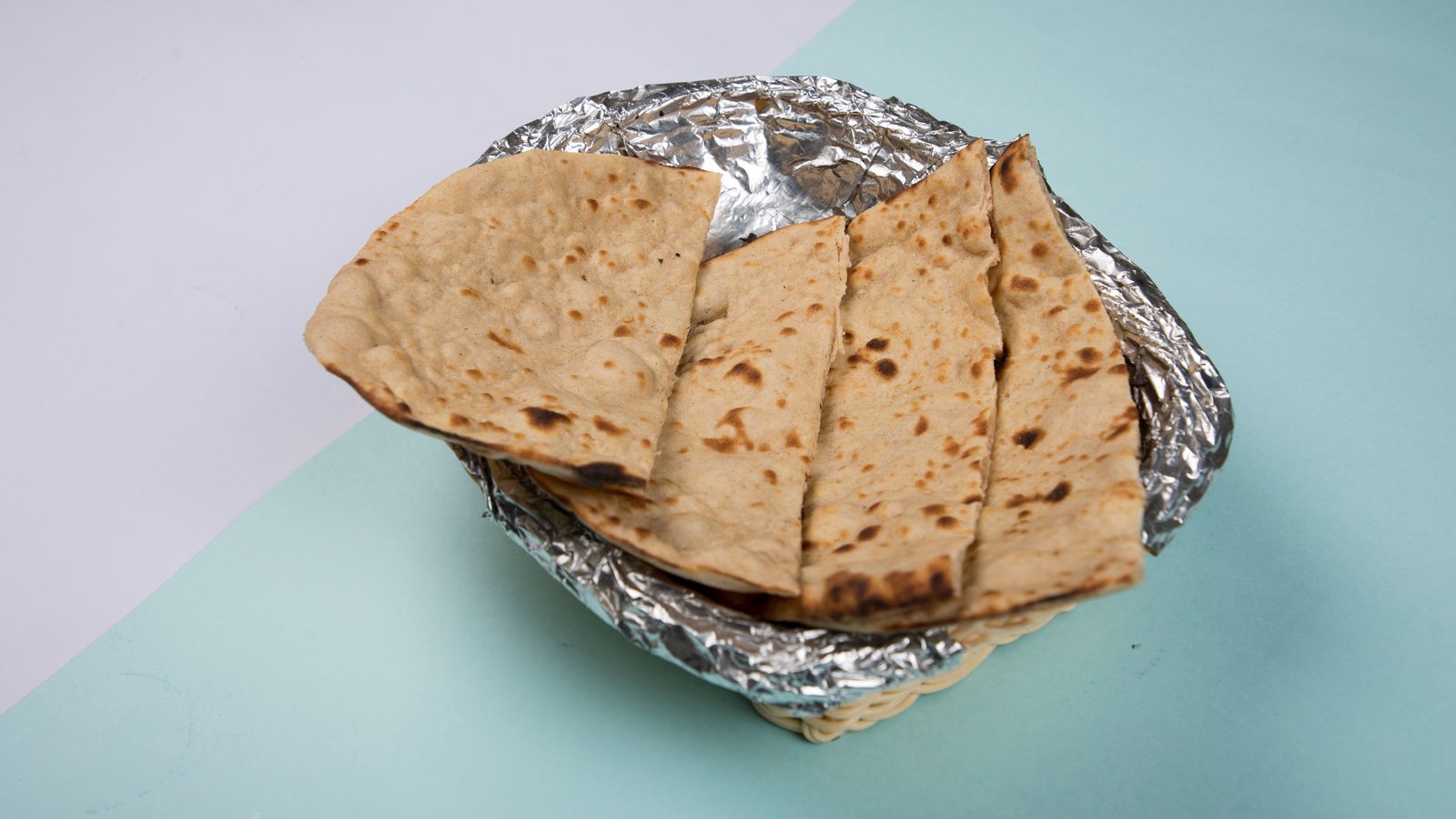
Quick answer: Rotis hard an hour after dinner? It happens for two reasons: they lose moisture, and the cooked starch firms up again as it cools. You can’t stop that completely, but you can slow it a lot. Knead a softer dough with warm water, rest it for 15 to 30 minutes, cook on a properly hot tawa so each roti is done in about a minute, brush with ghee, and keep them wrapped while they cool. Reheat with a little steam, not dry heat.
Key takeaways
- Tight dough, no resting time and a lukewarm tawa are the usual reasons for rotis hard by lunchtime.
- A hot tawa cooks the roti fast. Slow cooking on low heat dries it out.
- Cooling and refrigeration change the starch. A 2023 study found chapati stored at 4°C for 24 hours had more resistant starch, which forms as starch retrogrades.
- Steam brings stiff rotis back. Dry heat makes them harder.
In this article, you’ll learn:
- Why rotis harden as they cool
- 6 fixes, from the dough to the casserole
- The right water, rest and cooking times
- How to store and reheat rotis
- A quick troubleshooting table
Why Rotis Get Hard After Cooling
A fresh roti is soft because the starch in the atta has soaked up water and swollen during cooking. As the roti cools, two things happen. Moisture escapes into the air, and the starch slowly rearranges itself into a firmer structure. Food scientists call this retrogradation.
A 2023 study in Frontiers in Nutrition measured this in wheat chapati. Chapati stored for 24 hours at 4°C had 2.77% resistant starch, compared with 2.13% when fresh and 2.39% after 24 hours at room temperature. The authors link that rise to retrogradation at low temperatures. They didn’t measure softness, but it explains a familiar problem: rotis from the fridge feel like cardboard.
So some firming is normal, and even well-made rotis firm up overnight. The fixes below make them start softer and lose moisture more slowly.
Fix 1: Make a Softer Dough So Rotis Don’t Turn Hard
Very often, rotis hard by lunchtime started as a tight dough. TTK Prestige’s guide lists improperly kneaded dough as a main cause and suggests kneading with warm water, added gradually, until the dough is soft but not sticky.
How much water? Cook With Manali uses about ¾ cup (180 ml) plus 1 tablespoon of water for 2 cups (270 g) of atta, and says to adjust for your flour. The dough should be soft and pliable and hold a fingerprint when you press it.
TTK Prestige suggests kneading for 8 to 10 minutes until the dough is smooth and elastic. Add a spoon of water at a time if it feels dry.
Fix 2: Rest the Dough
Skip the rest and the dough fights you when you roll it. TTK Prestige says unrested dough stays taut. Its guide suggests 15 to 20 minutes, and up to 30 in its FAQ. Cook With Manali rests hers for 20 to 30 minutes under a damp cloth.
If you keep dough in the fridge, Cook With Manali suggests bringing it back to room temperature before rolling. Cold, stiff dough rolls unevenly and needs more dry flour.
Fix 3: Use Less Dry Flour When Rolling
TTK Prestige lists too much dry flour while rolling as another cause. Loose flour also burns on the tawa and leaves a dusty taste. Dust lightly, and tap off the extra before the roti goes on the tawa.
Fix 4: Cook Hot and Fast
This is the fix most people get wrong. A low flame feels safer, but it dries the roti and leaves rotis hard and leathery. TTK Prestige says rotis get chewy and hard on low heat, and also when they’re left on the pan too long.
Here’s how the timing works on a hot tawa:
| Step | Cook With Manali | TTK Prestige |
|---|---|---|
| Preheat tawa | Medium-high, until hot | Medium-high for 3 to 4 minutes, water drops should sizzle |
| First side | About 15 to 30 seconds, until bubbles appear | Flip at the right moment, don’t leave it |
| Second side | About 30 seconds, until brown spots | Cook quickly |
| Puff | On the flame, or press with a cloth on induction | Not specified |
| Finish | Brush with ghee right away | Cover briefly to hold softness |
The whole roti takes about a minute. If yours takes three, your tawa isn’t hot enough.
Fix 5: Ghee and a Wrap While They Cool
Cook With Manali brushes each roti with ghee straight off the flame, a step many Indian homes swear by for softness.
Unwrapped rotis hard within the hour are a common sight, so wrap them. TTK Prestige suggests lining the casserole with a clean cotton cloth, and warming the casserole with hot water first (then drying it), because a cold casserole cools the rotis fast. It also suggests letting rotis sit for 30 seconds to a minute before stacking, so steam doesn’t turn them soggy, and not overfilling the box.
Fix 6: Store and Reheat With Steam
For later in the day or the next morning:
- Cook With Manali wraps rotis in foil and then a paper towel, and says using only one layer makes them soggy. The same two layers work in the fridge.
- To reheat, cover with a damp cloth and microwave for about 30 seconds, or sprinkle a little water on the roti first.
- TTK Prestige also says steam reheating works better than dry heat, for example a tawa with a little water.
For longer storage, Cook With Manali freezes cooled rotis with parchment between them in a freezer bag.
If you’ve got a pile of rotis hard as papad already, don’t throw them away. Our leftover roti recipes turn them into quick snacks.
Quick Troubleshooting: Why Are My Rotis Hard?
| What you notice | Likely cause | Fix |
|---|---|---|
| Hard as soon as they cool | Tight dough | Add water, knead longer |
| Hard to roll, shrinks back | Dough not rested | Rest 15 to 30 minutes, covered |
| Dry, pale and leathery | Tawa not hot enough | Preheat on medium-high |
| Brittle with dark spots | Left on the tawa too long | About 1 minute per roti in total |
| Dusty, burnt flour taste, stiff edges | Too much dry flour | Dust lightly, tap off the extra |
| Soft at first, hard later | Left uncovered or in a cold box | Ghee, cloth wrap, warm casserole |
| Cardboard from the fridge | Starch firming in the cold | Reheat with steam, not dry heat |
Frequently Asked Questions About Rotis Hard After Cooling
Why do my rotis go hard in winter?
Cold kitchens make it worse. The dough is stiffer, the tawa takes longer to heat, and the rotis cool faster once they’re off the flame. Use warm water, give the tawa its full preheat, and warm the casserole.
Does adding oil or milk to the dough help?
Cook With Manali lists 1 to 2 teaspoons of oil as optional and doesn’t use it herself. Most of the softness comes from enough water, kneading and a hot tawa.
Should I keep rotis in the fridge?
Only if you need them the next day. The study above found more starch firming at 4°C, so refrigerated rotis feel harder. Wrap them well and reheat with steam.
Why are my rotis soggy instead of hard?
They were stacked or wrapped while still steaming. Let each one rest for 30 seconds to a minute before it goes into the casserole.
Soft Rotis Start Before the Tawa
Rotis hard after cooling usually come down to the dough and the heat. Use a softer dough, rest it, cook fast on a hot tawa, then let ghee and a warm wrapped casserole do the rest. When rotis do firm up, a little steam brings them back.
Save this for your next tiffin morning, share it with whoever rolls the rotis at home, and follow our WhatsApp channel for more kitchen fixes.