
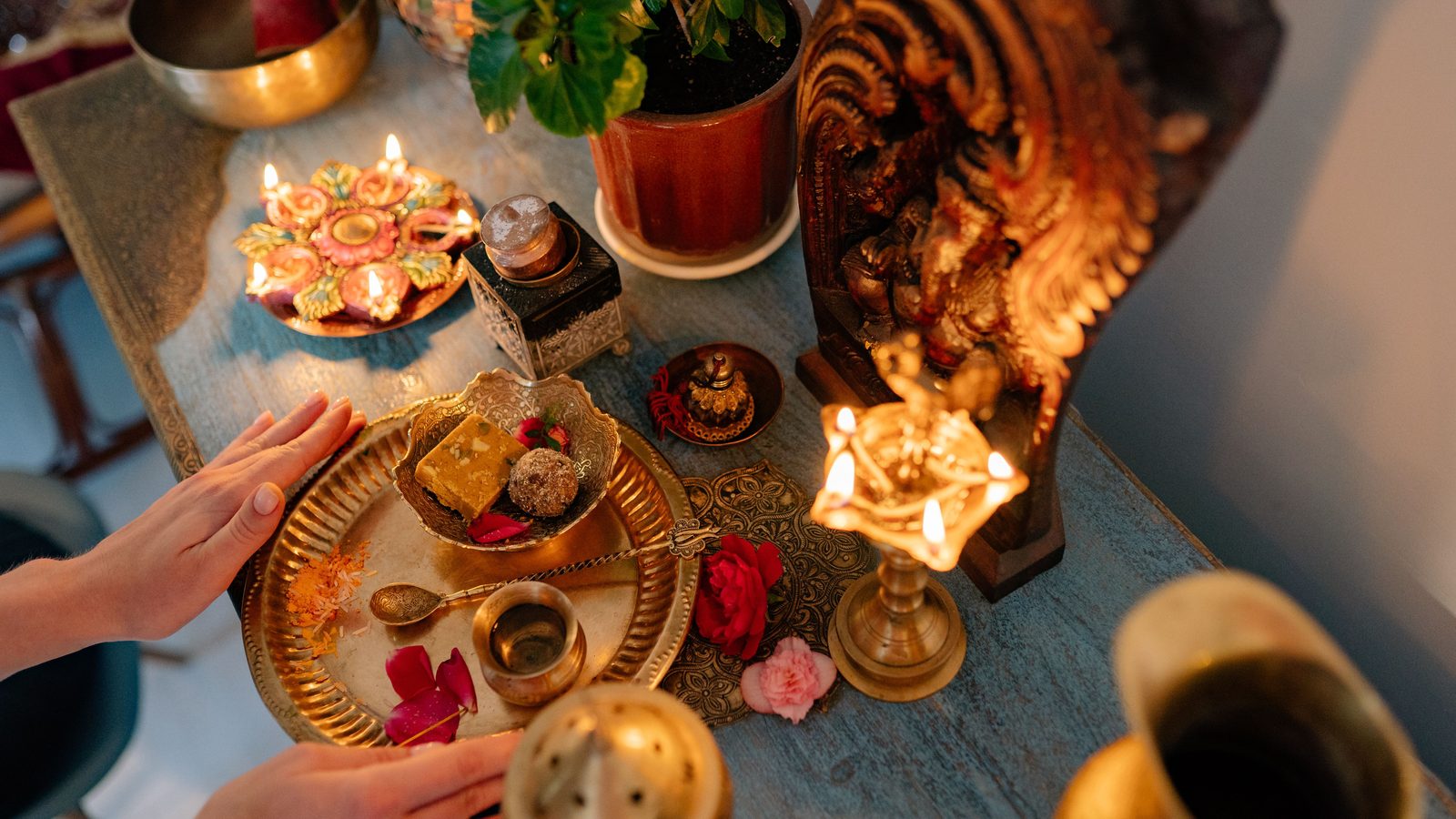
Quick answer: Drik Panchang lists Tulsi Vivah on Saturday, 21 November 2026, with Dwadashi tithi starting at 6:31 am in New Delhi. A simple Tulsi Vivah prasad plate can be panchamrit, coconut barfi, peanut and jaggery laddoo, makhana kheer, plus sugarcane pieces and fresh fruit. None of these need grain, so guests keeping the Vaishnava Ekadashi fast that day can usually eat them too. The whole plate takes about an hour if you cook in the right order.
Key takeaways
- Tulsi Vivah falls on Saturday, 21 November 2026 (Drik Panchang, New Delhi). Tithi times shift by city.
- Drik Panchang notes that in Maharashtra the prasad usually includes sugarcane, coconut sweets, fruits and peanuts.
- Tulsi leaves go on top of the bhog in many homes, so pick a few clean leaves before you start cooking.
- Panchamrit has honey, so don’t give it to babies under one year old.
Tulsi Vivah is the ceremonial wedding of the tulsi plant to Lord Vishnu, often represented by a Shaligram stone. It comes the day after Dev Uthani Ekadashi, and a lot of homes do a small puja in the courtyard or balcony. The food side doesn’t have to be a big production. A few simple items, made with care, are enough for most families.
In this article, you’ll learn:
- The 2026 date and tithi times for Tulsi Vivah
- Five easy Tulsi Vivah prasad items and how to make them
- A cooking order that gets the plate ready in about an hour
- Which items work for guests who are fasting
Tulsi Vivah 2026 Date and Tithi
Drik Panchang’s Tulasi Vivah page lists the festival on Saturday, 21 November 2026, for New Delhi. It gives these timings:
- Dwadashi tithi begins: 6:31 am on 21 November
- Dwadashi tithi ends: 4:56 am on 22 November
These times are for New Delhi. Your city may differ by several minutes, so check your local panchang or ask your family priest before fixing the puja time. Some families also do the ceremony on Ekadashi itself, so go by your own custom.
There’s one more thing worth knowing for the menu. Drik Panchang’s 2026 Ekadashi list shows the Vaishnava Dev Uthani Ekadashi on the same Saturday. So in some homes, a few people at the puja will still be fasting. A prasad plate with no rice or wheat solves that problem.
What Goes on a Tulsi Vivah Prasad Plate
Drik Panchang describes a few regional customs. In Maharashtra, it says the prasad usually includes sugarcane, coconut sweets, fruits and peanuts. It also notes that in the Braj region, tulsi leaves are central, and no bhog is offered without them.
That gives a simple, traditional base. Here’s a five-item Tulsi Vivah prasad plate built around it:
| Item | Active time | Fast-friendly? | Best eaten |
|---|---|---|---|
| Sugarcane pieces and fresh fruit | 10 min | Yes | Same day |
| Panchamrit | 5 min | Yes, in most homes | Within a few hours |
| Peanut and jaggery laddoo | 15 min | Yes | A few days, airtight |
| Coconut barfi | 25 min | Yes | 2 to 3 days, refrigerated |
| Makhana kheer | 20 min | Yes | Same day, refrigerate leftovers |
“Fast-friendly” here means no grain. Some families avoid certain items, like sugar, during a fast. Check with the person fasting.
5 Easy Tulsi Vivah Prasad Recipes
1. Sugarcane pieces and fruit
This one is just prep. Peel and cut sugarcane into short pieces, or buy it pre-cut from the market. Wash seasonal fruit and cut it just before the puja so it doesn’t brown. Many homes also place whole sugarcane stalks around the tulsi pot as a mandap, so buy a little extra.
2. Panchamrit
Panchamrit is the classic five-ingredient offering. Mix in a small steel or silver bowl:
- ½ cup milk
- 2 tablespoons fresh curd
- 1 teaspoon ghee
- 1 teaspoon honey
- 1 teaspoon sugar or mishri
- A few tulsi leaves
Stir until smooth. Make it close to puja time, since it’s a dairy mix and shouldn’t sit around at room temperature.
One caution: the NHS says don’t give honey to a child until they’re over 1 year old, because it can occasionally carry bacteria that cause infant botulism. If there’s a baby at the puja, keep a little plain milk and tulsi aside for them, or skip the panchamrit for that child.
3. Peanut and jaggery laddoo
This is the quickest sweet on the plate, and it ties in with the peanuts Drik Panchang mentions.
- Dry-roast 1 cup raw peanuts on low heat until they smell toasty. Cool and rub off most of the skins.
- Pulse the peanuts in a mixer to a coarse powder. Don’t grind too long, or they’ll turn into peanut butter.
- Add ½ to ¾ cup grated jaggery and a pinch of cardamom. Pulse a few more times until it starts clumping.
- Press into small laddoos while the mix is still slightly warm from the grinding.
If it won’t bind, add a teaspoon of warm ghee. Store in an airtight box.
4. Coconut barfi
Coconut sweets are part of the Maharashtrian Tulsi Vivah prasad, and nariyal barfi is the easiest of them.
- Heat 2 cups fresh grated coconut, ½ cup milk and ¾ cup sugar in a heavy kadhai.
- Stir on medium-low heat. The sugar melts first, so it’ll look wet for a while.
- Keep stirring for about 15 to 20 minutes until the mix thickens and starts to leave the sides of the pan.
- Add cardamom powder, spread on a greased plate, and cut into squares once it’s warm but firm.
Fresh coconut barfi is softer and goes off sooner than the dry version, so keep it in the fridge.
5. Makhana kheer
This gives fasting guests something warm and filling.
- Roast 1 cup makhana in a teaspoon of ghee until crisp. Crush half of them roughly.
- Simmer 3 cups milk, stirring often, for about 10 minutes.
- Add all the makhana and cook another 8 to 10 minutes until creamy.
- Sweeten with sugar or jaggery and add cardamom. If you use jaggery, take the kheer off the heat and let it cool slightly first, so the milk doesn’t split.
A One-Hour Cooking Order
Cooking in this order keeps the stove busy and the plate ready on time:
- 0 to 10 min: Roast the peanuts and the makhana, one after the other in the same pan.
- 10 to 35 min: Start the coconut barfi. While it cooks, put the milk on for the kheer on the second burner.
- 35 to 45 min: Spread the barfi to set. Add makhana to the kheer.
- 45 to 55 min: Grind and roll the peanut laddoos. Finish the kheer.
- Last 5 min: Cut fruit and sugarcane, mix the panchamrit, and pick tulsi leaves.
If you only have one burner, make the barfi and laddoos in the morning and the kheer just before the puja.
Keeping the Sugar in Check
Festival plates are sweet, and that’s fine for a day. Still, the WHO recommends keeping free sugars under 10% of daily energy, and its definition includes honey and syrups. Jaggery counts as added sugar too. A few easy swaps:
- Cut the laddoos small. They’re rich, and one bite-sized laddoo is enough as prasad.
- Use less sugar in the kheer and let the milk’s own sweetness carry it.
- Put more fruit and sugarcane on the plate and fewer barfi pieces.
Our post on jaggery vs sugar explains why gur isn’t much different for your health.
Frequently Asked Questions About Tulsi Vivah Prasad
When is Tulsi Vivah in 2026?
Drik Panchang lists it on Saturday, 21 November 2026, for New Delhi, with Dwadashi tithi from 6:31 am on 21 November to 4:56 am on 22 November. Times vary by city.
What is traditionally offered as Tulsi Vivah prasad?
It varies by region. Drik Panchang says that in Maharashtra the prasad usually includes sugarcane, coconut sweets, fruits and peanuts. Many homes also place tulsi leaves on every bhog item.
Can people who are fasting eat this prasad?
Most of it, yes. Panchamrit, fruit, sugarcane, coconut barfi, peanut laddoo and makhana kheer contain no grain. Fasting rules differ between families, so check with the person keeping the vrat.
Can I make the prasad a day ahead?
The peanut laddoos can be made a day or two early. Coconut barfi can be made the evening before and kept in the fridge. Make panchamrit, kheer and cut fruit on the day.
Keep It Simple This Saturday
A good Tulsi Vivah prasad plate doesn’t need ten dishes. Sugarcane, fruit, panchamrit and two or three quick sweets cover the tradition and feed fasting guests too. Check your local tithi time, cook in the order above, and you’ll have the bhog ready well before the puja.
Save this plan for Saturday, share it with family who are hosting the puja, and follow our WhatsApp channel for more festival recipes.