
Quick answer: Langar dal is a slow-cooked dal of whole black urad with a little chana dal, finished with a simple ghee tadka of cumin, ginger, onion and tomato. It has no cream or butter, which is what sets it apart from dal makhani. Soak the urad for at least 4 to 6 hours, pressure cook it until soft, mash it lightly and simmer it in the tadka. With Gurpurab on Tuesday, 24 November 2026, you can cook it a day early. It only thickens and deepens overnight.
Key takeaways
- Guru Nanak Jayanti (Gurpurab) falls on Tuesday, 24 November 2026, as per Drik Panchang’s New Delhi listing.
- Every recipe we compared uses mostly whole urad with a smaller amount of chana dal. One adds a little rajma.
- Langar dal skips cream, butter and curd. Its creaminess comes from soaking, long cooking and mashing.
- It thickens as it rests, so add hot water when you reheat it.
In this article, you’ll learn:
- What makes langar dal different from dal makhani
- The urad to chana ratio from three published recipes
- Soaking times, water and whistle counts
- A simple tadka and how to scale the dal for guests
- How to cook it a day ahead for Gurpurab
Gurpurab 2026: When to Cook Your Langar Dal
Drik Panchang’s New Delhi page lists Guru Nanak Jayanti on Tuesday, 24 November 2026. It marks the 557th birth anniversary of Guru Nanak. Purnima tithi begins at 11:42 pm on 23 November and ends at 8:23 pm on 24 November.
Cooking a langar-style meal at home this year, with langar dal, roti and kada prasad? Then start soaking the urad on Sunday night or Monday morning. The dal holds well in the fridge, so Monday evening cooking leaves you free on the day.
What Makes Langar Dal Different From Dal Makhani
Both start with whole black urad. The difference is what goes in at the end.
Fun Food Frolic’s langar wali maa ki dal says plainly that there’s no cream, butter or curd in it. It calls dal makhani the richer, more commercial version with a different texture and taste. Langar dal gets its body from the lentils themselves, from slow cooking and a light mash. The spices stay mild: cumin, ginger, a little chilli, turmeric and tomato.
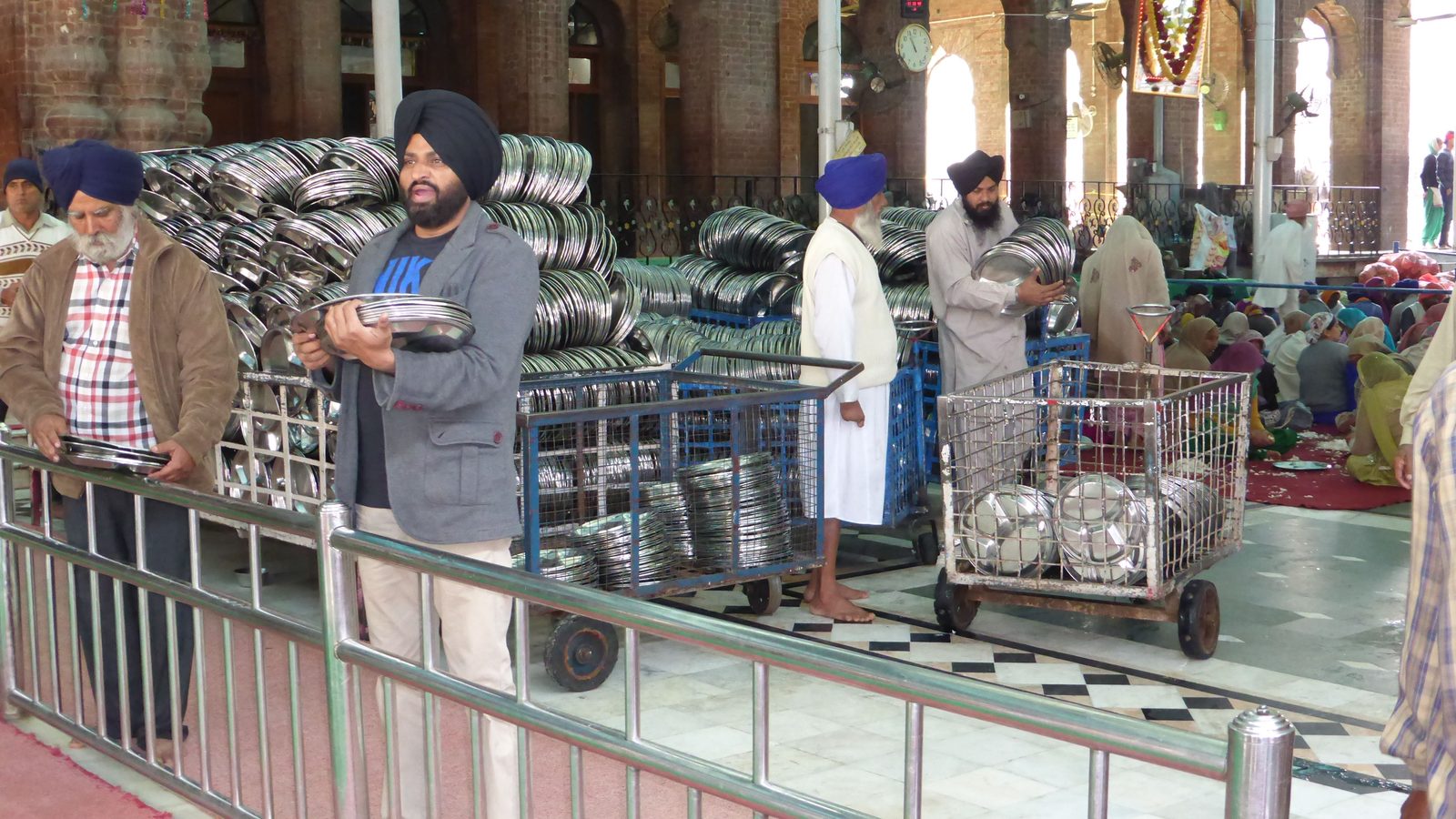
There’s a practical reason for that. A langar meal is cooked in huge pots and served to everyone who walks in, so the dal has to be plain, filling and easy to make in bulk.
The Langar Dal Ratio: Urad to Chana
We compared three published recipes. They agree on the base but not on the exact ratio:
| Recipe | Whole urad | Chana dal | Rajma | Soak | Water | Pressure cook |
|---|---|---|---|---|---|---|
| Ranveer Brar | 1½ cups | ½ cup | None | Overnight | 4 to 4½ cups | 4 to 5 whistles |
| Hebbar’s Kitchen | ½ cup | 2 tbsp | None | 4 hours | 3 cups | 6 whistles |
| Fun Food Frolic | 1 cup | ¼ cup | ¼ cup | Overnight, at least 6 hours | 3 cups | 3 to 4 whistles on low |
So the urad is three to four times the chana dal. Ranveer Brar’s ratio is 3:1, Hebbar’s works out to 4:1, and Fun Food Frolic’s is 4:1 with an extra quarter cup of rajma. If you’re new to langar dal, start with 3 parts urad to 1 part chana. The chana dal adds a little bite, and the urad turns creamy.
Whistle counts vary because cookers, flames and soaking times vary. Our guide to pressure cooker whistles for dal, rice and rajma explains why the same dal needs different counts in different kitchens. The test is simple: a soaked urad grain should crush easily between your fingers.
Soak Properly, or Langar Dal Takes Forever
Whole urad has a tough skin. Hebbar’s Kitchen notes that without soaking, the dal takes much longer to cook. Fun Food Frolic rinses the lentils two or three times until the water runs clear, then soaks them overnight or for at least 6 hours.
If you forgot to soak, don’t skip it entirely. Even 4 hours (Hebbar’s time) helps. Our post on soaking dal before cooking has times for other dals too.
Step-by-Step Langar Dal (Serves 4)
This version follows Hebbar’s quantities, which serve 4. Scale it up from there.
- Soak. Rinse ½ cup whole urad and 2 tbsp chana dal. Soak for 4 hours or overnight, then drain.
- Pressure cook. Add the dal to the cooker with 3 cups water, ½ tsp salt, ¼ tsp turmeric, a little chopped ginger and garlic, and 1 tsp oil. Hebbar’s cooks it for 6 whistles. Let the pressure drop on its own.
- Mash. Open the cooker and mash the dal lightly with the back of a ladle. Don’t blend it smooth. You want some whole grains.
- Tadka. Heat 2 tbsp ghee in a kadai. Add 1 tsp cumin and a bay leaf. Then add 1 chopped onion, 1 tsp ginger-garlic paste and 2 to 3 green chillies. Cook until the onion turns golden. Add 1 chopped tomato and cook until soft.
- Simmer. Pour in the dal, add about 1 cup water and simmer covered for 10 minutes. Finish with a pinch of garam masala and fresh coriander.
Hebbar’s Kitchen also says that for a more authentic taste you can cook the dal on a low flame for about 2 hours. If you have the time on a holiday morning, a longer, slower simmer after pressure cooking makes it creamier.
No onion or garlic? Hebbar’s notes that versions without onion and garlic are common, though the taste changes. Use more ginger and a pinch of hing in the tadka.
Scaling Langar Dal for Family and Guests
Langar dal scales well because the method doesn’t change. Multiply the quantities:
| Guests | Whole urad | Chana dal | Water to pressure cook |
|---|---|---|---|
| 4 | ½ cup | 2 tbsp | 3 cups |
| 8 | 1 cup | ¼ cup | 6 cups |
| 12 | 1½ cups | 6 tbsp | 9 cups |
For big batches, don’t fill the cooker more than halfway, since dal froths and can block the vent. Cook in two rounds if you need to. If your dal tends to spill, our fix for pressure cooker overflowing covers fill levels and flame.
Cooking Langar Dal a Day Ahead
Langar dal reheats well, which makes it a good Gurpurab-eve job. Hebbar’s points out that it thickens as it rests, so add a little hot water when you reheat it.
For safety, cool it in a shallow container and get it into the fridge within one to two hours of cooking. The UK government’s guide on how to chill and store food safely gives that window, and says to eat leftovers within 48 hours. Reheat until it’s bubbling hot all the way through.
Serve it with roti or tandoori roti, sliced onion and a spoon of ghee, which is how Fun Food Frolic’s author says her family serves it.
Frequently Asked Questions About Langar Dal
Is langar dal the same as dal makhani?
No. Both use whole black urad, but dal makhani adds butter and cream. Langar dal has no cream, butter or curd, so it’s lighter and more rustic.
Can I make langar dal without soaking?
You can, but it will take much longer to cook and may stay firm. Soak for at least 4 hours. Overnight is better.
Should I add rajma?
It’s optional. Fun Food Frolic adds a quarter cup of rajma to one cup of urad. Ranveer Brar and Hebbar’s Kitchen use only urad and chana dal.
How much protein does langar dal have?
It depends on the recipe and serving size. Fun Food Frolic estimates about 16 g protein and 16 g fibre per serving for its four-serving version. Treat that as a rough guide, not a lab figure.
Soak It, Cook It Slow, Skip the Cream
There isn’t much to langar dal, and that’s why people love it. Soak the urad, cook it until soft, mash it lightly and finish it in a plain ghee tadka. Skip the cream and butter. Make it a day ahead if you like, and it’ll taste even better on Gurpurab.
Save this recipe for Tuesday, share it with whoever’s cooking the Gurpurab meal at home, and follow our WhatsApp channel for more festival recipes.