
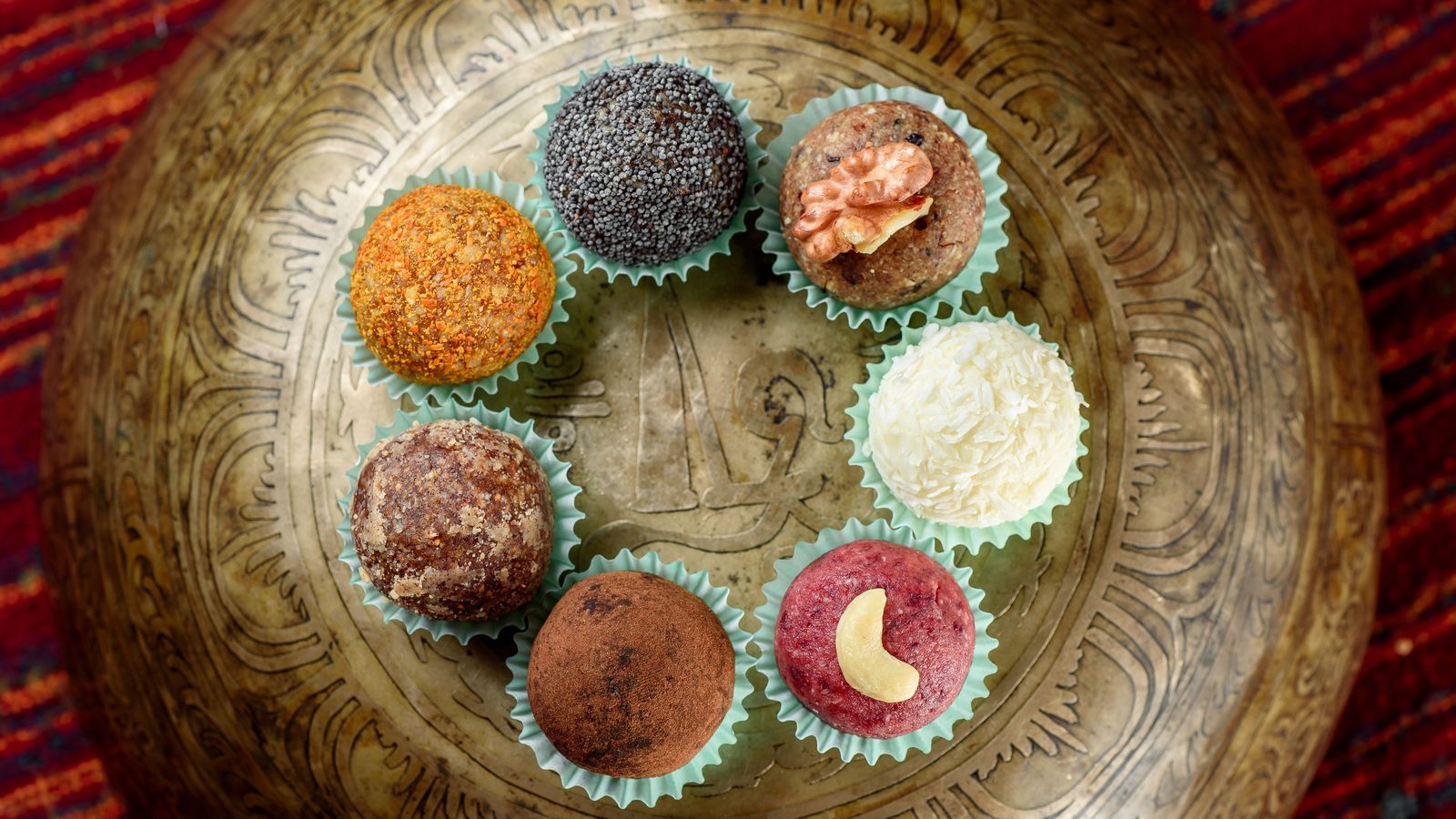
Quick answer: You can make gond ke laddoo with about 70 g of ghee instead of the 150 to 250 g many recipes use. Dry-roast the atta, use ghee only to fry the gond and bind the mix, and let warm jaggery syrup do most of the binding. Even then, if you make 16 from a batch, each one is still a rich sweet at roughly 140 to 150 kcal, so one a day in winter is a sensible portion.
Key takeaways
- Two well-known recipes use 150 g and 250 g of ghee per batch. This version uses about 70 g.
- Gond must be fried slowly in ghee that isn’t too hot, or it stays chewy inside.
- Jaggery syrup, not ghee, is what holds a lower-ghee laddoo together.
- Gond ke laddoo is a traditional winter sweet. There’s no good evidence it “warms” the body, so enjoy it as a treat, not a remedy.
In this article, you’ll learn:
- What gond is and how it behaves in hot ghee
- How much ghee standard recipes use, and where to cut
- A step-by-step gond ke laddoo recipe with less ghee
- Rough calories per laddoo and a fair portion
- Fixes for crumbly or chewy laddoos
What Is Gond, and Why Fry It?
Gond is edible gum, the dried resin from certain trees, sold as small pale crystals at kirana and dry-fruit shops. Raw, it’s hard and glassy. Fried slowly in ghee, it puffs up into light, crunchy pieces. That’s the texture you want in gond ke laddoo.
Nisha Madhulika’s classic gond ke laddu warns that the oil heats fast, so lower the flame as soon as the gond goes in, and break a fried piece open to check it’s cooked inside. If it isn’t, fry it again on low heat. Her jaggery version says the same: ghee that’s too hot leaves the gond raw in the middle.
Gond ke laddoo is a north Indian winter tradition, often made in big batches and eaten one in the morning. Many families also make it for new mothers. You’ll often hear that it keeps you warm. That’s a cultural belief rather than something studies have shown, so it’s best thought of as a festive winter sweet.
How Much Ghee Do Gond Ke Laddoo Recipes Use?
Here’s how the two Nisha Madhulika recipes compare with the lower-ghee version below:
| Ingredient | Classic recipe (sugar) | Jaggery recipe | Less-ghee version (this post) |
|---|---|---|---|
| Wheat flour | 200 g | 150 g | 150 g, dry-roasted |
| Gond | 200 g | 50 g | 50 g |
| Ghee | 250 g | 150 g | About 70 g (5 tbsp) |
| Sweetener | 350 g sugar | 200 g jaggery | 175 g jaggery |
| Nuts and extras | 40 to 45 almonds, melon seeds | 50 g almonds, 50 g dry coconut, dry ginger | 50 g almonds, 30 g dry coconut |
In both standard recipes, the flour is roasted in a lot of ghee. That’s where most of the fat goes, and it’s the easiest place to cut. Atta can be dry-roasted in a heavy kadhai. It needs more stirring, but it browns and smells nutty just the same.
Fat has 9 kcal per gram, compared with 4 for carbohydrate and protein, according to the NHS guide to fats. Ghee is almost all fat, so 250 g of it adds over 2,000 kcal to a batch before anything else goes in.
Gond Ke Laddoo Recipe With Less Ghee (About 16 Laddoos)
You’ll need
- 1 cup (150 g) whole wheat atta
- 50 g gond (edible gum)
- 5 tablespoons ghee (about 70 g), divided
- 50 g almonds, chopped
- 30 g dry coconut, grated
- 175 g jaggery, grated
- ¼ cup water
- ½ teaspoon cardamom powder
- ½ teaspoon dry ginger powder (saunth), optional
Method
- Dry-roast the atta. Put the atta in a heavy kadhai on a low to medium flame. Stir without stopping for 12 to 15 minutes, until it turns a shade darker and smells like toasted biscuits. Tip it into a large bowl.
- Fry the gond. Heat 3 tablespoons of ghee on a low to medium flame. Add a small spoonful of gond at a time. It should puff and turn pale gold within a minute. Lift it out, and fry the next batch. Small batches let a little ghee go a long way.
- Check one piece. Break a puffed piece. It should be crunchy all the way through. If the centre is glassy, fry the batch again on low.
- Toast the nuts. In the leftover ghee, toast the almonds and coconut for a minute. Add them to the atta.
- Crush the gond. Press the fried gond lightly with a rolling pin. You want small bits, not powder. Mix it into the atta.
- Make the syrup. Melt the jaggery in the water on a low flame. Once it’s fully dissolved and starts to foam, switch off. Strain it to catch grit.
- Mix and bind. Pour the warm syrup over the atta mix. Add the cardamom, dry ginger and the last 2 tablespoons of ghee, warmed. Mix with a spoon, rest for 5 minutes, then shape firm laddoos with greased hands while the mix is warm.
Let them cool on a plate for an hour before you store them in an airtight box. Nisha Madhulika’s jaggery recipe says gond laddus keep for more than a month. With less ghee, keep yours somewhere cool and dry, and check them after a couple of weeks.
Gond Ke Laddoo Calories and a Sensible Portion
This is a rough estimate using standard per-100 g values for each ingredient, like those in the USDA FoodData Central database. Your exact numbers will depend on your atta, jaggery and laddoo size.
| Part of the batch | Approximate kcal |
|---|---|
| 150 g atta | About 500 |
| 175 g jaggery | About 650 |
| 50 g almonds | About 290 |
| 30 g dry coconut | About 200 |
| 70 g ghee | About 630 |
| Gond | Small, mostly fibre |
| Total, about 16 laddoos | About 2,300 |
That works out to roughly 140 to 150 kcal a laddoo. Make 12 bigger laddoos from the same batch and each one is closer to 190 kcal. A version using 250 g ghee would add around 1,600 kcal more to the same batch.
So, is this a “healthy” gond ke laddoo? It’s lighter than the classic, but it’s still a sweet with added jaggery and saturated fat. The WHO’s healthy diet guidance suggests keeping free sugars under 10% of daily energy and saturated fat under 10% too. One laddoo a day fits into most winter diets. Three probably doesn’t.
If you’re managing diabetes, count it like any other sweet and check with your doctor or dietitian.
Want to compare fats in your kitchen? We looked at ghee vs oil for Indian cooking. And if you’ve been told gur is the healthy sugar, read jaggery vs sugar first.
Fixes for Crumbly or Chewy Laddoos
| Problem | Likely cause | Fix |
|---|---|---|
| Laddoos crumble | Syrup too little or mix too cool | Add 1 to 2 tbsp warm syrup or warm ghee, mix, shape again |
| Gond chewy or sticks to teeth | Fried in ghee that was too hot | Fry slowly on low next time, and break a piece to check |
| Raw, floury taste | Atta not roasted long enough | Roast until it darkens a shade and smells toasty |
| Laddoos hard as stone | Jaggery syrup cooked too long | Switch off as soon as it foams. Rest the mix before shaping |
| Sticky, won’t hold a shape | Too much syrup | Add a spoon or two of roasted atta |
Dry-roasted atta absorbs syrup a little differently from ghee-roasted atta, so add the syrup slowly. You may not need all of it.
Frequently Asked Questions About Gond Ke Laddoo
Can I make gond ke laddoo without any ghee?
Not really. Gond needs hot fat to puff, and without it you’ll get hard, glassy bits. You can keep the ghee low, but you can’t skip it.
Is gond ke laddoo good for weight loss?
No sweet is. It’s calorie-dense, so if you’re trying to lose weight, have one small laddoo as a treat rather than a daily habit.
How many gond ke laddoo can I eat in a day?
For most adults, one is a fair portion. The classic recipe Nisha Madhulika shares suggests 1 to 2 in winter mornings, and that was with the full-ghee version.
Can I use sugar instead of jaggery?
Yes. The classic recipe uses sugar syrup at one-thread consistency. Jaggery gives a deeper flavour, but the calories are similar.
Make a Small Batch First
Gond ke laddoo is worth making well. Dry-roast the atta, fry the gond slowly in small batches, and let warm jaggery syrup do the binding. You’ll use less than half the usual ghee, and the laddoos still hold. Then treat them as what they are: a rich winter sweet, best enjoyed one at a time.
Save this recipe for the next cold morning, share it with whoever makes the winter laddoos at home, and follow our WhatsApp channel for more winter cooking ideas.