
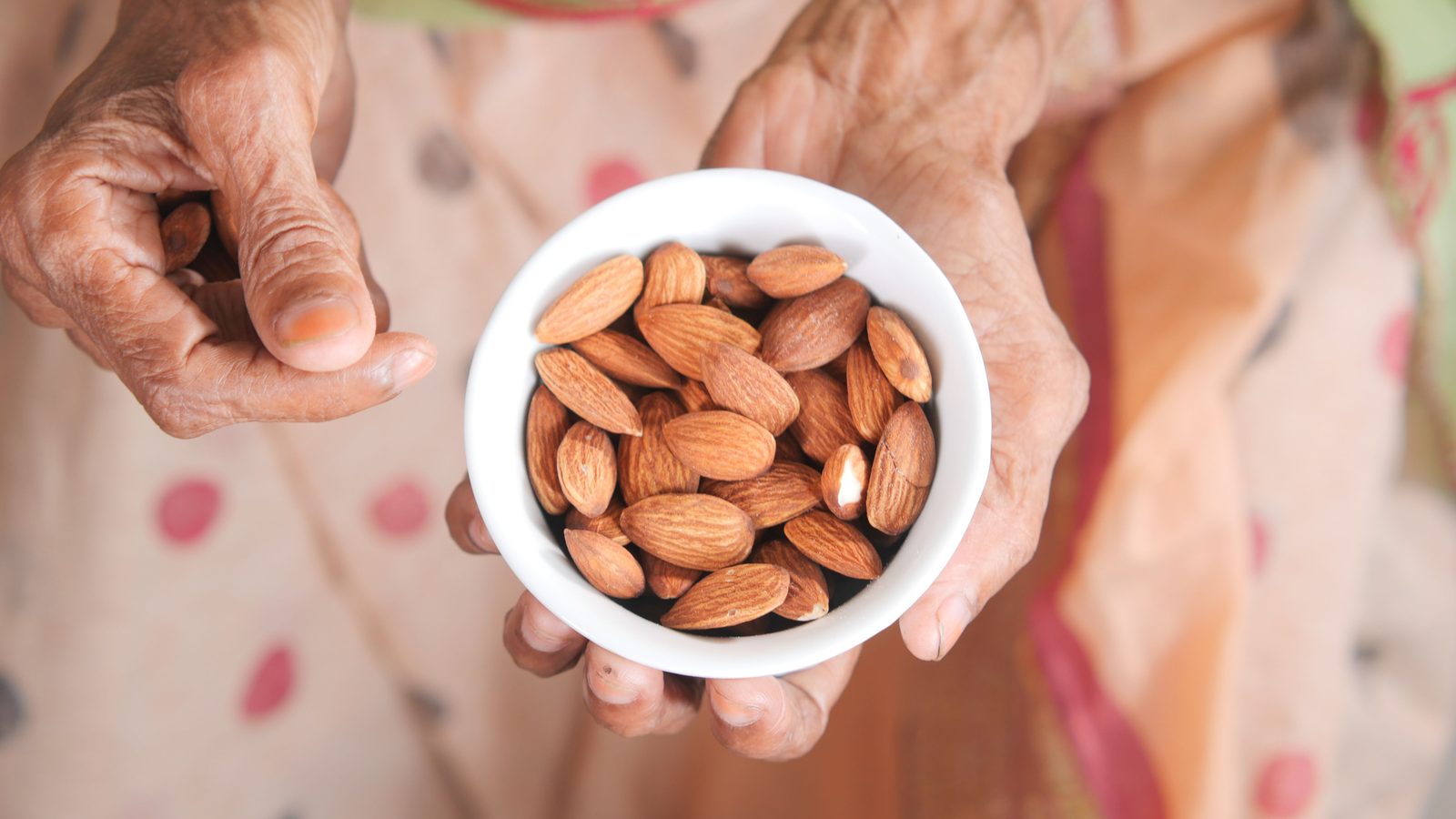
Quick answer: Soaked almonds aren’t meaningfully healthier than raw ones, based on the studies that have tested it. Soaking for 12–24 hours barely changes phytic acid, didn’t improve mineral levels, and didn’t make almonds easier on the stomach in a 76-person trial. Soak them if you like the softer texture, want to peel them, or are making badam milk or paste. Otherwise, a handful of raw almonds does the same job.
Key takeaways
- In lab tests, soaking changed phytate in almonds by only a small amount, roughly 5–12% either way.
- Soaked nuts ended up with slightly lower mineral levels, not higher.
- In a randomised trial, soaked whole almonds weren’t better tolerated than unsoaked ones, and people reported a little more gas.
- Soaking is still useful for texture, peeling, and smooth pastes for kheer, halwa or badam milk.
In this article, you’ll learn:
- Where the soaked almonds idea comes from
- What three studies found on phytic acid, minerals and digestion
- When soaking still makes sense in an Indian kitchen
- How many almonds to eat and how to soak them properly
Why People Soak Almonds in the First Place
Most Indian families have a version of the same advice: soak five or six almonds at night, peel them in the morning, eat them before breakfast. Grandparents swear by it for “brain power”, and the habit is now common in fitness circles too.
The modern explanation usually goes like this. Almonds contain phytic acid (phytate), which can bind minerals such as iron and zinc and make them harder to absorb. Soaking, the claim says, removes the phytate and “activates” the nut, so you get more nutrition and less bloating.
The logic borrows from grains and dals, where soaking does reduce phytate. Our guide to soaking dal before cooking covers that side. The question is whether almonds behave the same way. Researchers have tested it, and the answer is mostly no.
With Diwali dry fruit boxes arriving in many homes this week, it’s a good time to sort out what soaking actually changes.
Soaked Almonds and Phytic Acid: The Lab Results
Two lab studies measured phytate in almonds before and after soaking.
A University of California, Davis team soaked raw almonds in water at room temperature for up to 24 hours. Their paper in the Journal of the Science of Food and Agriculture found it took at least 24 hours of soaking to reduce the main form of phytate, and even then the drop was only 4.75% compared with unsoaked almonds. That’s statistically real, but nutritionally small.
A University of Otago group in New Zealand went further. They tested almonds, hazelnuts, peanuts and walnuts, whole and chopped, with three soaking methods: 12 hours in salt water, 4 hours in salt water, and 12 hours in plain water. Their 2020 study in Food Chemistry found phytate changed by only -12% to +10% across treatments. Soaking also left the nuts with lower mineral levels overall, especially when chopped, and it didn’t improve the phytate-to-mineral balance. The authors concluded their results don’t support the claim that “activating” nuts improves nutrient availability.
So the part of the story that sounds most scientific is the part that falls apart when tested.
Do Soaked Almonds Digest Better?
The other big claim is that soaked almonds are gentler on the stomach. The same Otago team tested this in a randomised crossover trial published in the European Journal of Nutrition in 2018.
Here’s what they did. 76 adults ate 30 g of almonds a day in four forms, each for 12 days: whole unsoaked, whole soaked, sliced unsoaked and sliced soaked. Every day, they rated how much they liked the nuts and any stomach symptoms.
What they found:
- Stomach symptoms were minimal with every type of almond.
- Whole soaked and whole unsoaked almonds were liked equally.
- Sliced soaked almonds were liked the least.
- Flatulence was rated slightly higher for soaked whole almonds than for unsoaked whole almonds.
- Phytate was actually a little higher in the whole soaked almonds they tested (563 mg vs 531 mg per 100 g).
That’s one trial, and it was done in New Zealand rather than India. But it’s the only proper human test of the claim, and it found no digestion benefit from soaking.
Raw vs Soaked Almonds at a Glance
| Raw almonds | Soaked almonds | |
|---|---|---|
| Phytic acid | Baseline | About the same (small change either way) |
| Minerals | Baseline | Slightly lower in lab tests |
| Digestion | Well tolerated in trials | No better; slightly more gas in one trial |
| Texture | Crunchy | Soft, easy to chew |
| Skin | Hard to remove | Peels off easily |
| Shelf life | Weeks to months if stored well | Best eaten within a day or so |
| Best for | Snacks, chikki, roasting, trail mix | Badam milk, kheer, halwa, paste for gravies |
When Soaked Almonds Still Make Sense
None of this means soaking is pointless. It just means the reasons are about cooking and comfort, not hidden nutrients.
Soak almonds when:
- Someone finds raw almonds hard to chew. Older family members, people with dental work, and small children often do better with soft, peeled almonds. Chop them small for young kids, since whole nuts are a choking risk.
- You’re making badam milk or kheer. Soaked, peeled almonds grind into a much smoother paste.
- You’re adding almonds to a gravy. Shahi paneer or korma gets a creamier base from soaked almond paste.
- You simply prefer the taste. Many people find soaked, peeled almonds milder and less bitter. That’s a fine reason.
Skip the soaking when you just want a quick handful with tea, or when you’re using almonds in laddoos and chikki where crunch is the point. Our dates and dry fruit laddoo recipe works well with raw, lightly roasted almonds.
A quick note on peeling: the brown skin contains fibre and plant compounds, so leaving it on is fine if you don’t mind the texture. Peel when a recipe needs a white, smooth paste.
How to Soak Almonds Properly
If you prefer soaked almonds, a few small habits keep them fresh and safe.
- Rinse first. Wash the almonds under running water to remove dust.
- Use clean drinking water. Cover the almonds by at least an inch.
- Soak 8–12 hours. Overnight is enough to soften them. Longer soaking doesn’t add meaningful benefit, based on the studies above.
- Refrigerate in warm weather. Moist nuts spoil faster than dry ones. If your kitchen is warm, soak them in the fridge.
- Throw away the soaking water. Rinse again before eating.
- Eat within a day or so. Soaked almonds don’t keep like dry ones. Soak only what you’ll eat.
How Many Almonds Should You Eat?
A common serving is a small handful of about 20–23 almonds, roughly 28–30 g. That’s close to the 30 g a day used in the Otago trial. According to USDA FoodData Central, almonds have about 21 g of protein per 100 g, so a 28 g handful gives you roughly 6 g of protein along with fibre and healthy fats.
The same handful also has around 160 calories. That’s worth remembering during Diwali, when dry fruit boxes sit open on the table and handfuls turn into bowlfuls.
Harvard’s Nutrition Source points to several large studies where people who ate nuts regularly were less likely to have heart attacks or die from heart disease. It also warns that nuts are calorie dense, so they work best eaten instead of chips and other snacks, not on top of them. Raw or soaked, the benefit comes from eating them regularly in sensible amounts.
Frequently Asked Questions About Soaked Almonds
Are soaked almonds better than raw almonds?
Not nutritionally, based on the available research. Soaking barely changed phytate, slightly lowered mineral levels in lab tests, and didn’t improve digestion in a human trial. Soaked almonds are softer and easier to peel, which is a perfectly good reason to prefer them.
Should I remove the skin from soaked almonds?
It’s up to you. The skin adds fibre and plant compounds. Peel when you want a smooth, white paste for badam milk, kheer or gravies, or if the skin bothers your stomach.
How long should I soak almonds?
Overnight, about 8–12 hours, is enough to soften them. One study found even 24 hours of soaking cut the main form of phytate by under 5%, so longer soaking isn’t worth it.
Can I give soaked almonds to children?
Yes, but chop or grind them for young children because whole nuts can be a choking hazard. Soaked, peeled almonds are easier to grind into a paste for kids’ milk or porridge.
The Bottom Line on Your Dry Fruit Box
Soaked almonds are a kitchen preference, not a nutrition upgrade. If the overnight soak suits your routine, keep it. If you forget, grab a raw handful and don’t feel you’ve missed out.
Found this useful? Save it, share it with the family member who swears by soaked badam, and follow our WhatsApp channel for more myth-checked Indian kitchen guides.
This article is for general information and isn’t medical advice.