
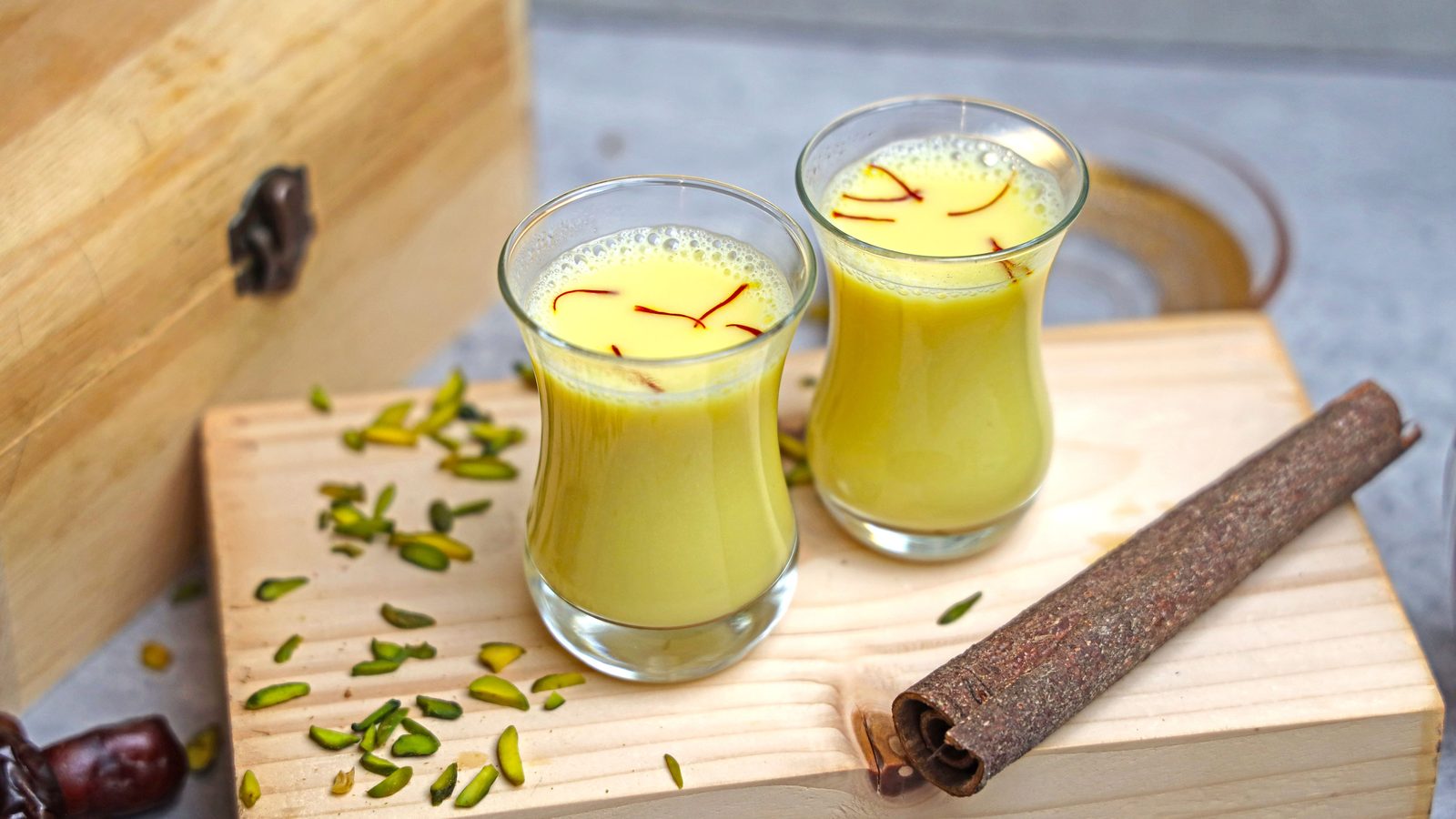
Quick answer: For one cup of haldi doodh, use about ¼ to ½ teaspoon of turmeric with a small pinch of black pepper, and simmer for a few minutes. That’s a comfortable amount for taste and colour. There’s no proven “dose” for colds or immunity, and adding more doesn’t turn it into medicine. Enjoy it as a warm winter drink, and be careful with concentrated turmeric capsules, which are a different thing.
Key takeaways
- About ¼ to ½ tsp of turmeric per cup gives roughly 25 to 50 mg of curcumin, using lab averages for turmeric powder.
- That’s far below the doses used in many supplement studies, so don’t expect drug-like effects.
- US health authorities say there isn’t enough evidence to conclude turmeric or curcumin helps any health condition.
- Buy a packed brand with an FSSAI licence number, since lead adulteration in loose turmeric has been found in South Asia.
In this article, you’ll learn:
- How to make haldi doodh that isn’t bitter or gritty
- How much curcumin a cup really contains
- Whether black pepper and fat are worth adding
- What the evidence says about colds and immunity
- Who should go easy on it
The Simple Haldi Doodh Recipe
This makes one cup and takes about 5 minutes.
You need:
- 200 ml milk, any kind you like
- ¼ to ½ tsp turmeric powder
- A small pinch of black pepper
- A little grated ginger or a pinch of cardamom, if you like it
- Jaggery or honey to taste, optional
Method:
- Warm the milk in a small pan.
- Stir in the turmeric, pepper and ginger or cardamom.
- Simmer gently for 3 to 4 minutes, stirring so the powder doesn’t sink and catch.
- Take it off the heat, strain if you’ve used ginger, and rest it for a minute.
- Add sweetener last, once it’s slightly cool. Honey in particular should go in after the heat.
If it’s bitter, you’ve probably used too much turmeric or skipped the simmer. Drop to ¼ tsp and cook it a little longer. If it’s gritty, whisk the powder into a spoonful of warm milk first, then pour that in.
How Much Curcumin Is in a Cup of Haldi Doodh
Curcumin is the yellow compound most turmeric research focuses on, and there isn’t much of it in the spice. A 2006 lab analysis of 28 spice products found that pure turmeric powder averaged 3.14% curcumin by weight. Brands vary, so these are rough figures.
A level teaspoon of ground turmeric weighs about 3 g. That gives us:
| Turmeric in your cup | Approx. weight | Approx. curcumin | How it tastes |
|---|---|---|---|
| ¼ tsp | 0.75 g | ~24 mg | Mild, pale gold |
| ½ tsp | 1.5 g | ~47 mg | Clearly turmeric, a little earthy |
| 1 tsp | 3 g | ~94 mg | Strong and often bitter |
For comparison, the often-quoted pepper study below gave people 2 g of curcumin in one dose. To get that from turmeric powder, you’d need around 64 g, or about 21 teaspoons. So kitchen haldi doodh and capsule research aren’t the same thing, and that’s fine.
Is there an upper limit to think about? Europe’s food safety authority set an acceptable daily intake for curcumin of 3 mg per kg of body weight, a figure Germany’s risk assessment institute also uses for supplements. For someone weighing 60 kg, that’s about 180 mg a day from all sources. A cup or two with ½ tsp each stays well under that, even with turmeric in your dal and sabzi.
Do You Need Black Pepper and Fat?
The pepper advice comes from a real study, but it’s often stretched. In a 1998 study from Bangalore, volunteers took 2 g of curcumin, and blood levels were very low or undetectable. Adding 20 mg of purified piperine, the active compound in pepper, raised absorption by about 2000%.
That’s a big number from a small dose test using pure compounds. We can’t say what a pinch of ground pepper does for a cup of milk. It costs nothing and tastes good, so add it, but don’t expect the study’s result.
Fat is similar. Curcumin dissolves in fat far better than in water, which is one reason milk suits it. Full-fat milk or a small spoon of ghee is a traditional choice. If you’re watching calories, regular toned milk is still fine. Our guide to ghee vs oil explains why it’s best to keep ghee portions small.
Does Haldi Doodh Help a Cold or Boost Immunity?
Many families swear by it, and a warm drink can feel soothing on a sore throat or a cold night. But that’s different from treating an illness.
The US National Center for Complementary and Integrative Health says there isn’t enough evidence to conclude that turmeric or curcumin benefits any health purpose. There are early positive results for knee osteoarthritis, though better studies are needed. We didn’t find good trials on haldi doodh and colds.
So here’s a fair way to think about it:
| Claim | What we can say |
|---|---|
| “It’s soothing before bed” | Reasonable. Warm milk is comforting for many people |
| “It gives you protein and calcium” | True of the milk. 200 ml of whole milk has about 6.7 g protein and 250 mg calcium |
| “It cures a cold” | No good evidence |
| “It boosts immunity” | Not shown for this drink |
| “More turmeric works better” | Not shown, and it makes the drink bitter |
If you have a high fever, breathlessness, or a cough that doesn’t settle, see a doctor. Don’t lean on haldi doodh to get you through it.
Turmeric Quality: Bright Yellow Isn’t Proof
A bright yellow colour isn’t a guarantee of good turmeric. A 2024 study across South Asia tested 356 turmeric samples from 23 major cities in India, Pakistan, Sri Lanka and Nepal, collected in 2020 and 2021. About 14% had detectable lead above the test threshold, and levels in samples from Patna were above 1000 μg/g. The authors linked the highest levels to lead chromate, a pigment that’s sometimes added to brighten the spice.
Those samples are several years old and came from wholesale and retail bazaars, so they don’t describe every packet on your shelf. Still, a few easy habits make sense if turmeric goes into your food every day:
- Choose a packed brand with an FSSAI licence number on the label.
- Be careful with loose powder of unknown origin, however vivid it looks.
- Consider buying whole dried turmeric from a source you trust and grinding it at home.
Don’t try to judge safety by colour or a home test. Lead chromate isn’t something you can reliably spot in your kitchen.
Who Should Go Easy on It
For most people, turmeric in normal food amounts is fine. The caution is mostly about concentrated products.
- Anyone on turmeric or curcumin capsules: NCCIH says highly absorbable curcumin products may harm the liver. A US drug-injury network has described 10 cases of liver injury linked to turmeric products. Stop and get checked if you notice fatigue, nausea, dark urine or yellow eyes.
- Pregnant or breastfeeding women: NCCIH says turmeric supplements in pregnancy may be unsafe, and safety during breastfeeding above food amounts isn’t well understood. Ordinary cooking is a different matter, but check with your doctor before taking anything stronger.
- People on regular medicines: Some herbal products interact with medicines. Tell your doctor if you take a concentrated form.
- Anyone with lactose trouble: Use a lactose-free milk or a plant milk. Almond or oat milk will work, though most have less protein. Look at the label.
- People with diabetes or watching sugar: Skip the jaggery or keep it small. Our jaggery vs sugar guide explains why gur still counts as sugar.
Stomach upset, acid reflux or loose motions can also follow oral turmeric, according to NCCIH. If a cup at bedtime gives you heartburn, cut the amount or have it earlier.
Easy Variations for Winter
Once you have the base, you can change it to suit your household. None of these change the health story, but they do keep the drink interesting.
- Ginger and pepper: Good on cold evenings, with more heat.
- Cardamom and saffron: A more festive cup for guests in Diwali week.
- Badam haldi doodh: Blend in a few soaked almonds, using our badam milk method.
- Cinnamon and dates: Soften a date in the warm milk and blend. Remember dates still count toward your sweetness.
- Kids’ version: Use just a pinch of turmeric and warm milk. Skip honey for babies under one year.
Frequently Asked Questions About Haldi Doodh
How much turmeric should I put in haldi doodh?
Most people do well with ¼ to ½ teaspoon per cup. It gives good colour and flavour. There’s no evidence that a bigger spoonful gives a bigger health benefit, and it’ll taste bitter.
Can I drink haldi doodh every night?
For most healthy adults, a cup made with normal kitchen amounts is fine. If you get heartburn, loose motions or take regular medicines, check with your doctor. Keep sweetener small if you drink it daily.
Should I boil or just stir turmeric into hot milk?
Simmering for 3 to 4 minutes gives a smoother, less raw taste. Keep the heat low so the milk doesn’t boil over, and stir so the powder doesn’t stick to the pan.
Does haldi doodh help with a cold?
It can feel soothing, but we didn’t find good trials showing it treats a cold. Rest and fluids are still the basics, and see a doctor if symptoms are severe or don’t improve.
The Bottom Line
Haldi doodh is a good winter habit because it’s warm, simple and made from milk you already have. It isn’t a remedy, and you don’t need heaped spoons of turmeric. Use ¼ to ½ teaspoon, a pinch of pepper, a good packet of haldi, and leave the bigger promises out of it.
Found this useful? Save it, share it with the family member who makes it for everyone, and follow our WhatsApp channel for more honest kitchen guides.
This article is for general information and isn’t medical advice.