
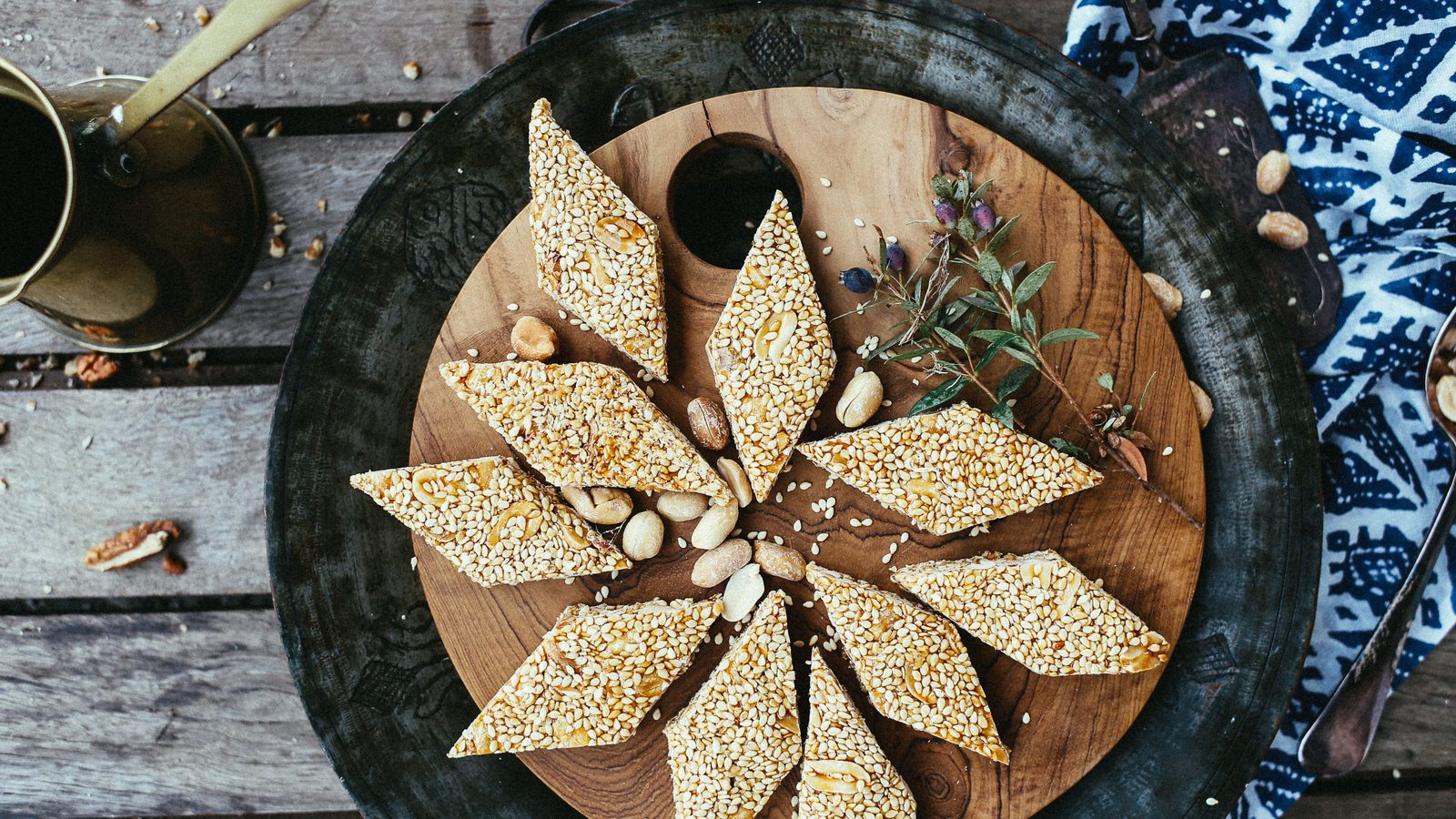
Quick answer: Til chikki turns chewy when the jaggery syrup comes off the heat before it reaches the hard crack stage. Cook it on low heat, stirring, until a drop in cold water sets into a brittle bit that snaps cleanly, which candy guides put at about 149°C to 154°C. Then mix in roasted sesame fast, roll it thin and cut it while warm. Store it airtight, because sugar pulls moisture from the air and softens over time.
Key takeaways
- Chewy chikki almost always means undercooked syrup. Rock-hard, bitter chikki means it went too far.
- Do the cold water test every 30 seconds or so once the syrup darkens and bubbles thickly.
- Equal amounts of roasted sesame and jaggery is a reliable starting ratio.
- A chewy batch can be remelted and cooked a little longer. A burnt one can’t be saved.
Til and gud are winter staples across India, and a batch of chikki is one of the quickest sweets you can make. It needs two main ingredients and about 20 minutes. It also goes wrong easily. The most common complaint is chikki that bends and sticks to your teeth instead of snapping. The good news is that the fix is simple once you know what’s happening in the pan.
In this article, you’ll learn:
- Why til chikki turns chewy, and why it sometimes turns rock hard
- The cold water test that tells you when the jaggery is ready
- A simple til chikki method with the right ratio
- How to rescue a chewy batch and store chikki so it stays crisp
Why Til Chikki Turns Chewy
Chikki is a brittle. Like peanut brittle or toffee, it depends on how much water is left in the syrup when you take it off the heat.
As jaggery syrup boils, water evaporates and the sugar gets more concentrated. The Exploratorium’s guide to sugar stages explains that at the soft crack stage, a drop of syrup in cold water forms threads that bend slightly before breaking. At the hard crack stage, there’s almost no water left, and the threads turn hard and brittle. Nut brittles are cooked to hard crack.
So if your chikki bends, it was pulled off at soft crack or earlier. That’s the whole problem in most kitchens. People see the jaggery melt, bubble and darken, assume it’s done, and stop a minute too early.
Other things that make it worse:
- Too much water or ghee. A splash of water helps jaggery melt evenly, but more water means more boiling time. Some cooks stop before all of it is gone.
- Humid weather. Sugar draws moisture from the air, so even well-made chikki softens if it’s left open on a damp day.
- Very soft, sticky jaggery. It holds more moisture to start with, so it needs longer in the pan.
The Cold Water Test for Til Chikki
You don’t need a candy thermometer, though it helps. Iowa State University’s food preparation lab manual gives these stages for sugar syrup:
| Stage | Temperature | What a drop does in cold water | Result in chikki |
|---|---|---|---|
| Soft ball | 112°C to 115°C | Forms a ball that loses its shape | Sticky, won’t set |
| Firm ball | 118°C to 120°C | Forms a ball that holds its shape | Chewy, toffee-like |
| Soft crack | 132°C to 143°C | Threads that crack when touched | Bends, sticks to teeth |
| Hard crack | 149°C to 154°C | Fine, brittle threads | Snaps cleanly |
Jaggery isn’t pure sugar. It contains minerals and other solids, so it browns faster and can scorch near the top of that range. Use the water test as your main guide and a thermometer as a backup.
How to do the test:
- Keep a small bowl of cold water next to the stove.
- Once the syrup turns darker and the bubbles become thick and frothy, drop a little into the water.
- Wait a few seconds for it to cool. The Exploratorium warns not to touch hot syrup straight away.
- Pick it up. If it squishes or bends, keep cooking. If it snaps with a crack, it’s ready.
Test every 30 seconds or so. The change from “almost” to “done” is quick, and the change from “done” to “burnt” is quicker.
Til Chikki Recipe That Sets Hard
This is a simple version. The recipe at My Ginger Garlic Kitchen uses equal amounts of roasted sesame and jaggery, and suggests up to 1¼ cups of jaggery per cup of sesame if you like it sweeter.
You’ll need:
- 1 cup white sesame seeds (til)
- 1 cup grated or powdered jaggery
- 1 teaspoon ghee, plus a little for greasing
- A pinch of cardamom powder (optional)
Method:
- Roast the til. Dry-roast the sesame on low heat, stirring, until it smells nutty and turns light golden. Tip it onto a plate so it doesn’t keep cooking.
- Grease your surface. Grease the back of a steel thali or a sheet of butter paper, and a rolling pin. Do this now. You won’t have time later.
- Melt the jaggery. In the same pan, add the ghee and jaggery. Stir on low heat until it melts completely.
- Cook to hard crack. Keep stirring on low to medium-low. It’ll froth, darken and thicken. Start testing in cold water once the bubbles look thick.
- Mix fast. The moment a drop snaps, switch off the heat, add the til and cardamom, and stir quickly until every seed is coated.
- Roll thin. Tip it onto the greased surface, flatten it with a spatula, then roll it thin with the greased rolling pin.
- Cut while warm. Score it into squares or diamonds with a knife while it’s still warm and pliable. Once it hardens, it’ll shatter instead of cutting.
- Cool fully. Let it cool completely, then break along the cut lines.
A heavy-bottomed pan helps a lot. Thin pans create hot spots, and jaggery burns quickly at the edges.
Til Chikki Too Hard or Bitter? What Went Wrong
The opposite problem is chikki that’s so hard it hurts your teeth, or tastes bitter and burnt. That happens when the syrup goes past hard crack and starts to caramelise and scorch.
| Problem | Likely cause | Fix next time |
|---|---|---|
| Chewy, bends, sticks to teeth | Syrup taken off before hard crack | Cook longer, test until it snaps |
| Soft and sticky after a day | Moisture from air, or stored open | Store airtight as soon as it cools |
| Rock hard, dark, bitter | Syrup overcooked or scorched | Lower heat, test earlier and more often |
| Won’t spread, sets in the pan | Rolling too slowly | Grease everything first, work fast |
| Seeds not sticking | Too little jaggery, or syrup too thin | Use at least 1:1, cook to hard crack |
| Raw-tasting til | Seeds under-roasted | Roast until golden and fragrant |
Too thick is also a problem. A thick slab is harder to bite even when it’s cooked perfectly, so roll it as thin as you can.
How to Rescue a Chewy Batch
Don’t throw it out. Chewy chikki is undercooked chikki, and you can cook it a bit more:
- Break the pieces up and put them back in a heavy pan.
- Melt them on low heat, stirring constantly. The til will toast a little more, so keep the heat gentle.
- Once it’s bubbling, test a drop in cold water.
- When it snaps, roll and cut as before.
Burnt chikki is a different story. The bitter taste doesn’t go away. If it’s only slightly overdone, you can crush it and sprinkle it over kheer or ice cream, where a little bitterness reads as caramel.
How to Store Til Chikki So It Stays Crisp
Moisture is the enemy. My Ginger Garlic Kitchen says til chikki keeps for up to a month in an airtight container at room temperature.
- Let it cool completely before packing. Warm chikki releases steam, and that condensation softens it.
- Use a container with a tight lid, not a plastic bag that’s been folded over.
- Layer pieces with butter paper so they don’t stick together.
- Keep it away from the stove and the kettle, where steam collects.
If a stored batch softens slightly, a few minutes in a warm, dry pan on the lowest heat can crisp the surface again. Let it cool before eating.
A Note on Jaggery and Sugar
Jaggery is often called the healthier choice, and it does carry small amounts of minerals. But it’s still sugar, and chikki is a sweet. Our guide on jaggery vs sugar explains why. Enjoy a piece or two after a meal, and keep the rest in the box.
Frequently Asked Questions About Til Chikki
Why is my til chikki chewy?
The jaggery syrup was taken off the heat before it reached the hard crack stage. Cook it a little longer and test a drop in cold water. It should snap, not bend.
Can I make til chikki with sugar instead of jaggery?
Yes. Sugar melts into a clear syrup that caramelises to golden. The cold water test works the same way. The taste is lighter and less earthy than gud chikki.
How long does til chikki last?
Up to about a month in an airtight container at room temperature, according to My Ginger Garlic Kitchen’s recipe. It softens faster if the container isn’t sealed well.
Do I need a candy thermometer?
No. The cold water test works well. A thermometer is helpful as a second check, but jaggery can scorch near the top of the hard crack range, so trust the snap.
Get the Snap Right Once
Good til chikki comes down to one thing: cooking the jaggery syrup until a drop snaps in cold water. Roast the til well, grease everything before you start, work fast once the syrup is ready, and store the pieces airtight. Once you’ve seen the snap, you’ll recognise it every time.
Save this recipe for the winter, share it with someone who keeps making chewy chikki, and follow our WhatsApp channel for more seasonal recipes.