
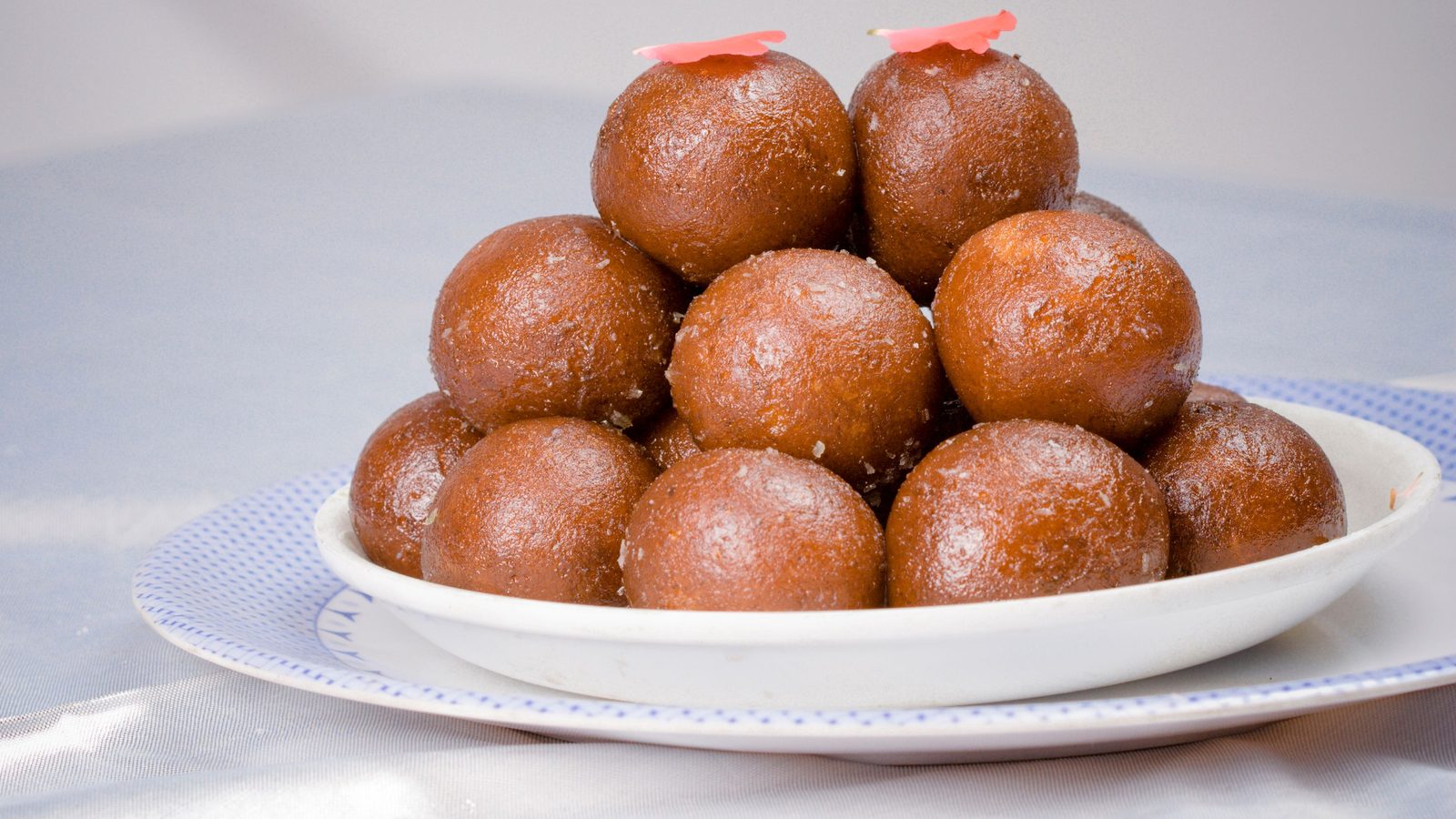
Quick answer: A gulab jamun hard inside is usually caused by frying on high heat, which browns the outside before the centre cooks, or by over-kneading the dough. Fry on low heat, around 140°C to 150°C, for 8 to 10 minutes, and mix the dough only until it comes together. Drop the jamuns into warm (not hot, not cold) syrup that’s only slightly sticky, then let them soak for at least 30 minutes. A batch that’s already hard can be softened a little by simmering it gently in thin syrup.
Key takeaways
- High frying heat is the most common cause. The outside browns and seals while the centre stays dense.
- Over-kneading, pressing hard while rolling and dry dough all make jamuns tight.
- Syrup that’s too thick or too cold doesn’t soak in. Recipe writers disagree on the exact thickness, but warm and only slightly sticky is a safe target.
- Give them time. Soaking for 30 minutes is the minimum, and 2 hours is better.
Wedding season, a birthday, a puja at home: gulab jamun turns up at all of them. It’s also one of the easiest sweets to get slightly wrong. The jamuns look perfect, dark and glossy, and then you bite into one and hit a firm, dry centre. If your gulab jamun is hard inside, the problem almost always happened at one of three steps: making the dough, frying, or soaking.
In this article, you’ll learn:
- The six common reasons gulab jamun goes hard inside
- The right frying heat and how to judge it without a thermometer
- How thick the syrup should be, and why its temperature matters
- How to rescue a batch that’s already hard
Why Is My Gulab Jamun Hard Inside?
Gulab jamun is made of khoya (milk solids) or milk powder, held together with a little maida and a pinch of baking soda. It’s fried slowly until it’s cooked through, then soaked in sugar syrup, which it absorbs and swells with. Anything that makes the dough tight, or stops the syrup reaching the centre, leaves a hard core.
Here are the six usual causes:
| Cause | What happens | Fix |
|---|---|---|
| Oil too hot | Outside browns and seals before the inside cooks | Fry on low heat for 8 to 10 minutes |
| Dough over-kneaded | Maida develops gluten and the jamun turns tight | Mix only until smooth |
| Pressed hard while rolling | Dense ball with no room to absorb syrup | Roll gently with light, greased hands |
| Dough too dry or cracked | Cracks and dense patches | Add milk a spoon at a time |
| Syrup too thick or too cold | Syrup can’t soak into the centre | Warm, slightly sticky syrup |
| Not soaked long enough | Centre hasn’t absorbed any syrup yet | At least 30 minutes, ideally 2 hours |
Two well-known recipe sources agree on the big ones. Cook With Manali lists three reasons for hard gulab jamun: rolling without soft hands, over-kneading the dough, and frying on high heat. Wonderchef’s gulab jamun guide says high frying heat gives a hard exterior and a raw interior, and that overworking the dough develops gluten, which makes jamuns hard.
Fix 1: Fry Low and Slow
This is the big one, and the most common reason people end up with gulab jamun hard in the middle. Wonderchef’s guide puts the oil at 140°C to 150°C, which it calls very low heat, with frying taking 8 to 10 minutes. Manali suggests heating the oil or ghee on medium for about 5 minutes, then turning the heat down to low before adding the jamuns.
No thermometer? Drop in a small pinch of dough. It should rise slowly to the surface with gentle bubbles. If it shoots up and sizzles hard, the oil is too hot. Turn off the flame for a minute and try again.
While frying:
- Don’t crowd the pan. Too many jamuns at once make the oil temperature swing.
- Keep them moving by gently swirling the oil or rotating them with a slotted spoon. Pressing or poking can crack them.
- Fry until they’re an even, deep golden brown all over. Pale jamuns are usually undercooked inside.
Fix 2: Don’t Knead the Dough Like Roti Dough
Gulab jamun dough isn’t atta dough. Kneading it hard makes the maida form gluten, the same stretchy network that makes rotis chewy. In a jamun, that means a tight, rubbery centre.
- Crumble the khoya first so there are no lumps.
- Add the maida and baking soda and mix gently with your fingertips.
- Stop as soon as it comes together into a smooth, soft dough.
- Let it rest for 10 to 20 minutes. Manali rests hers for 15 to 20 minutes, and Wonderchef suggests 5 to 10 for the milk powder version.
Wonderchef’s khoya version uses 250 g of khoya with only 4 to 5 tablespoons of maida and a quarter teaspoon of baking soda. That’s not much flour. Adding extra maida “to make it easier to roll” is a common way to end up with a gulab jamun hard in the middle.
Fix 3: Roll Gently and Check for Cracks
Roll each ball between lightly greased palms with almost no pressure. You’re shaping it, not compacting it. Manali says the balls should be completely smooth with no cracks.
If cracks appear, the dough is too dry. Wonderchef suggests adding a tablespoon of milk and mixing gently. Cracked balls can split in the oil, and dry dough fries up dense.
Keep the balls small and even. A big jamun needs longer in the oil to cook through, and it’s more likely to stay hard in the centre. They’ll swell in the syrup anyway.
Fix 4: Get the Syrup Right
This is where recipes disagree. Wonderchef says to simmer the syrup for 8 to 10 minutes to one-string consistency. Manali says not to look for any thread at all: bring it to a boil, simmer for about 5 to 6 minutes, and stop when it’s only a little sticky. She warns that if the syrup is too thick, the jamuns will never absorb it.
If you keep getting gulab jamun hard at the centre, try the thinner syrup. You can always simmer the syrup a little more after the jamuns have soaked if it tastes too thin.
Temperature matters too. Manali says the syrup should be warm, not hot. Very hot syrup can make jamuns lose their shape, and cold syrup won’t soak in. Fry, let the jamuns rest for a few seconds, then drop them into warm syrup.
If you’re curious about how sugar syrup changes as it boils, our guide to til chikki explains the stages. Gulab jamun syrup stays at the very thin end.
Fix 5: Soak Them Long Enough
Even perfect jamuns feel firm in the middle straight out of the oil, so don’t judge a gulab jamun hard or soft until it has soaked. The centre softens as it absorbs syrup. Wonderchef recommends at least 30 minutes of soaking and says 2 hours gives the best result. It says the jamuns swell by 20 to 30% as they soak.
If guests are coming, fry the jamuns a few hours ahead and leave them in the syrup. Warm the whole pan gently before serving.
Fix 6: Watch the Khoya
Fresh, soft khoya makes the softest jamuns. Very dry, crumbly khoya needs a little milk to come together, and old khoya can taste sour. Buy it from a shop you trust, use it within a day or two, and keep it in the fridge.
If you’re using milk powder instead, pick a full-fat one. Wonderchef calls the milk powder version faster and more forgiving than khoya, which makes it a good place to start if you keep getting hard centres.
How to Rescue Gulab Jamun Hard Inside Right Now
You can’t fully undo over-kneaded or overfried jamuns, but you can usually make them nicer to eat:
- Simmer them in thin syrup. Add a little water to the syrup to thin it, bring it to a gentle simmer, add the jamuns and keep them on the lowest heat for 5 to 10 minutes. Turn off the heat and let them soak for a couple of hours.
- Give them more time. Leave them covered in the syrup for a couple of hours at room temperature, then move the pan to the fridge overnight. A longer soak helps the centre.
- Serve them warm. A warm jamun always feels softer than a cold one. Warm a portion in its syrup before serving.
- Turn them into something else. Halve the firm ones and serve them over vanilla ice cream or with rabri, where a firmer texture works fine.
Frequently Asked Questions About Gulab Jamun Hard Inside
Why are my gulab jamuns hard after soaking overnight?
The syrup couldn’t get in. Usually the dough was too tight from over-kneading or extra maida, or the syrup was too thick. Next time, mix the dough gently and keep the syrup thinner.
What oil temperature is right for gulab jamun?
Wonderchef’s guide puts it at 140°C to 150°C, with frying taking 8 to 10 minutes. On a gas stove, that means low heat after the oil has warmed up. A test piece should rise slowly with gentle bubbles.
Can I fix gulab jamun hard in the centre after frying?
Partly. Simmer them gently in thinned syrup for a few minutes, then let them soak for a couple of hours. It softens them, but it won’t fully fix a dense dough.
Why do my gulab jamuns crack while frying?
The dough is too dry, the balls weren’t rolled smooth, or the oil is too hot. Add a little milk to the dough, roll until there are no cracks, and fry on low heat.
Soft Jamuns Start With Patience
A gulab jamun hard inside usually comes down to high heat, heavy hands or thick syrup. Mix the dough gently, roll it lightly, fry it slowly and soak the jamuns in warm, thin syrup for at least half an hour. Get those four steps right, and the centre will be as soft as the outside looks.
Save these fixes for your next batch, share them with whoever makes the sweets in your family, and follow our WhatsApp channel for more kitchen fixes.